Types of bouquets: a small excursioninto the world of floristry
At first glance, it seems that making a bouquet is a simple matter. You put the stems together one by one, tie them with a ribbon or wrap them in paper — done!
In reality, even arranging flowers neatly so that the buds don't stick out crooked and askew is already a difficult task. And to create harmonious, beautiful bouquets, florists diligently study the basics of composition, the compatibility of shades and plants with each other, assembly techniques, and types of bouquets by shape and style. We invite you to immerse yourself a little in the amazing world of floristry.
Perhaps, when buying your next bouquet, you will look at it differently: you'll wonder whether it's cascading, linear, or asymmetrical? Assembled in a spiral or in circles? Looking at someone else's profession from the inside and uncovering its secrets can be fascinating.
Round-shaped bouquet
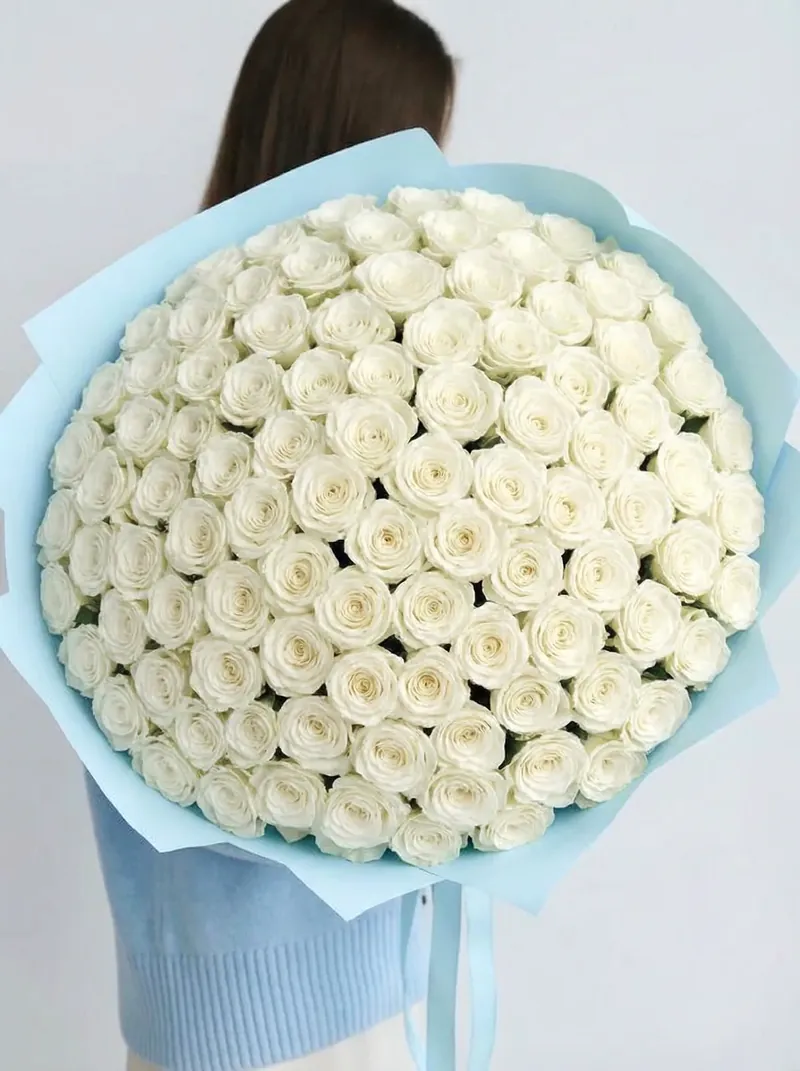
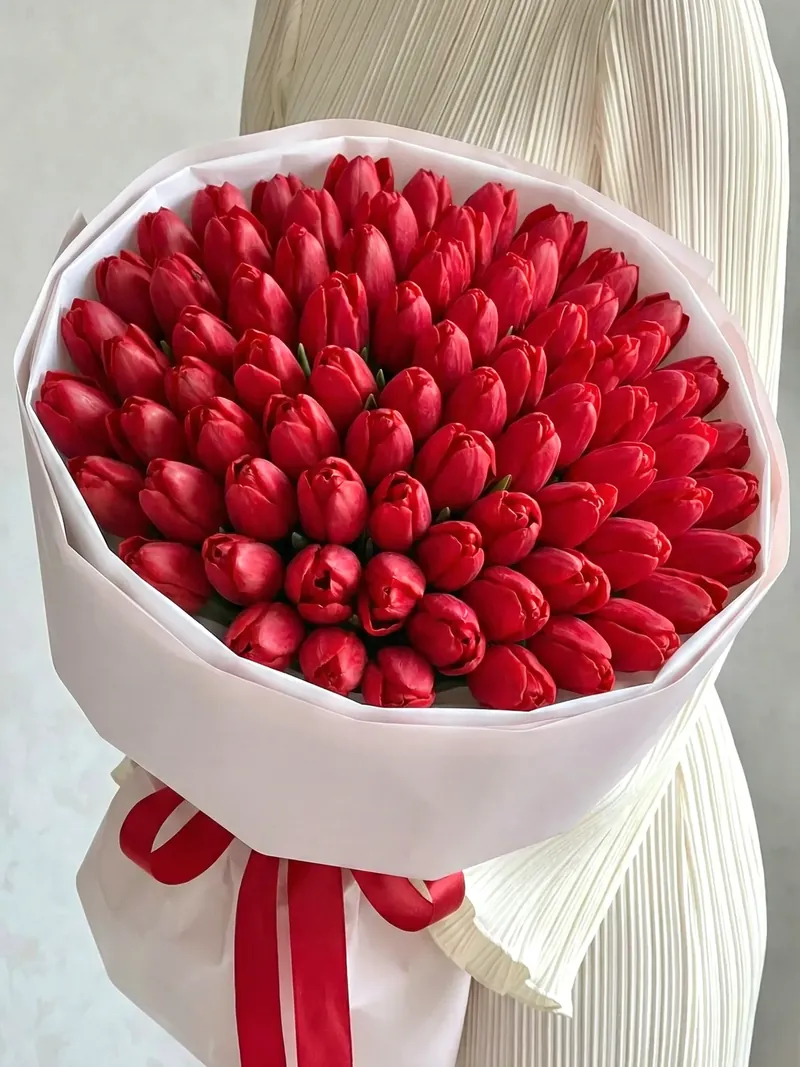
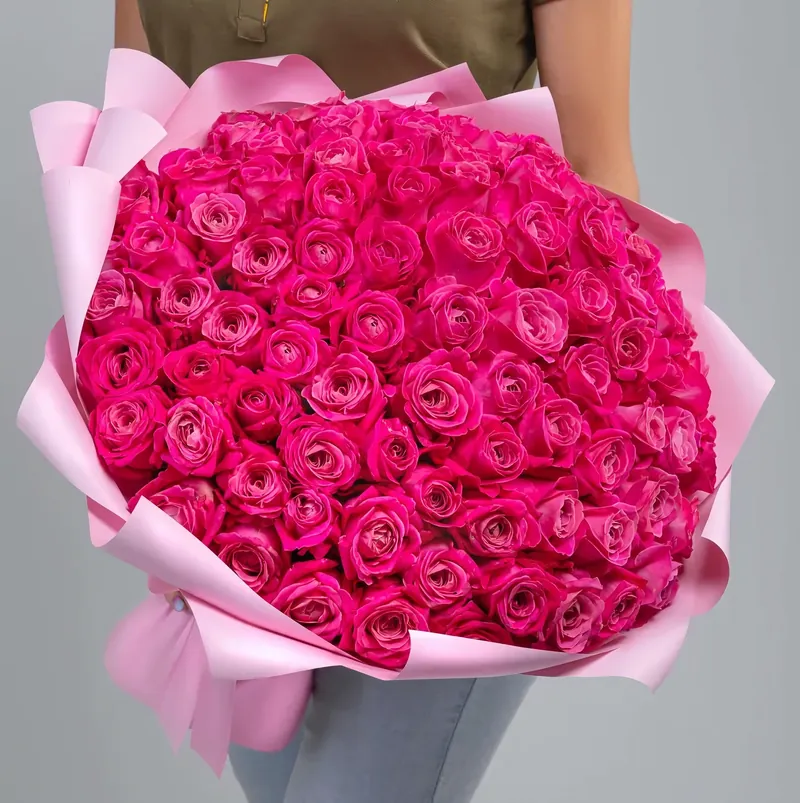
This is the most common and classic type of bouquet. If the flowers have thin, flexible stems or the composition combines several types of plants, assembly is most often done in a spiral. The flower with the longest stem is placed in the center. The others are attached to it — each slightly lower and to the left of the previous one, and at a 45° angle to the central one.
Spiral assembly
If the stems are sufficiently stiff and slightly differ in length (that is, the buds won't cover each other), you can use the parallel technique of making a bouquet. It is easy to learn and accessible even to non-professionals.
Parallel assembly
In wedding floristry, there is another technique for assembling round bouquets — Biedermeier. The flowers, pressed tightly against each other, are laid out in concentric circles. The stems are fastened with sticky tape.
Biedermeier
Biedermeier can look like a hemisphere, a cone, or have a flattened shape. The leaves are usually removed completely. Or they stick out above the flowers like feathers.
Linear compositions
This is when all the flowers are turned in one direction, sometimes arranged in a cascade. Such bouquets are also called vertical. It is this shape that is considered appropriate for a flower presentation to a man.
Vertical
Cascading
This is a type of vertical composition. But they are directed downward, not upward.
The shape of the bouquet is a triangle with the apex at the bottom, or an inverted drop. Sometimes it resembles a waterfall: when longer plants, cascading down, cover the shorter ones located below.
Visually, these structures seem fragile and unreliable, as if the nearest gust of wind would carry away most of the flowers. It takes the skill of a florist to make everything turn out differently in reality.
Cascade
But brides love cascades. They give the image lightness, grace, and charm. And seem to echo the train on a long wedding dress.
Such a floristic wonder is assembled from roses, eustomas, lilies, and orchids.
Frame bouquets
In them, the plants are attached to a frame of any shape the florist needs. It could be:
- a heart;
- a fan;
- a handbag;
- a cylinder;
- a snail.
Or any other shape that the florist wants and is able to create.
Frame
Frames are assembled from artificial materials, for example, from wire. Or from branches, stems, and greenery.
Such compositions are unusual and self-sufficient, but difficult to execute.
Asymmetrical bouquets
Asymmetry, the appearance of chaos that is actually carefully thought out and ordered, is in fashion today. It is precisely this appearance that asymmetrical or, in other words, free compositions create.
Asymmetrical
Although sometimes fairly strict asymmetry is used. For example, in one-sided bouquets, when flowers on long stems are arranged at the back, and in front of them, in tiers, increasingly shorter ones are placed. On the other side of the tall flowers there is nothing. The "axis of asymmetry" can be not only vertical but also horizontal. Also, asymmetrical compositions often have an S-shape.
Non-standard
Bouquets long ago ceased to be a routine accompaniment to a gift. Today they can quite well replace a gift. Of course, for this the composition must be bright and unusual.
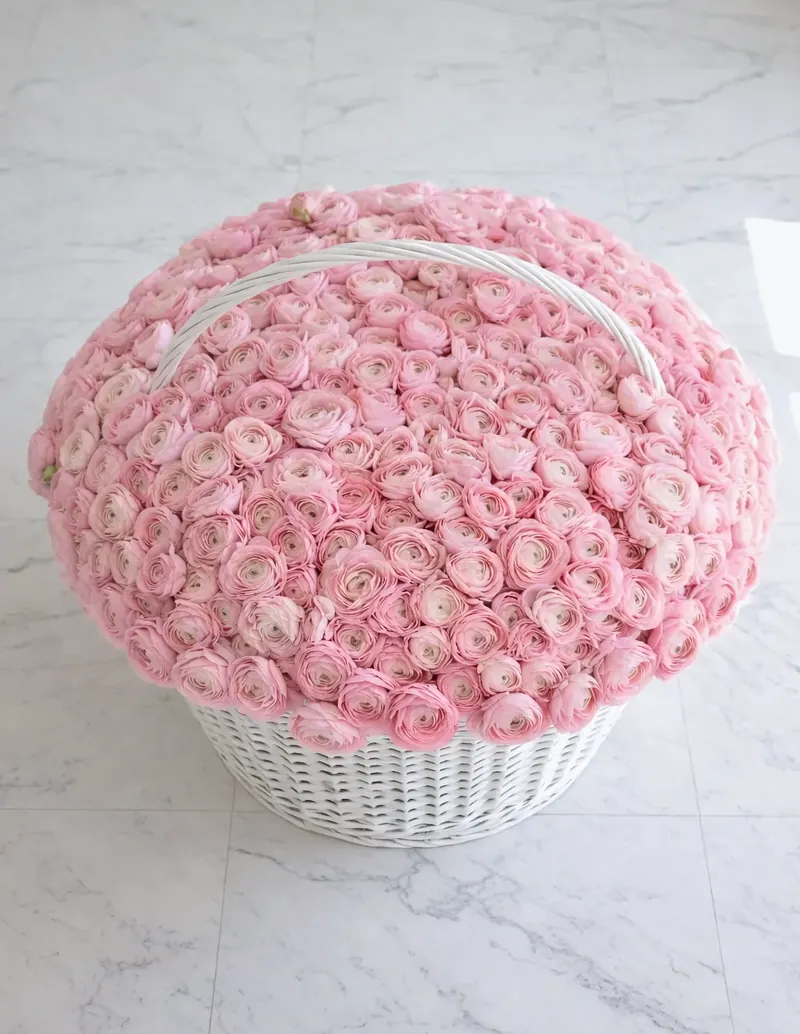
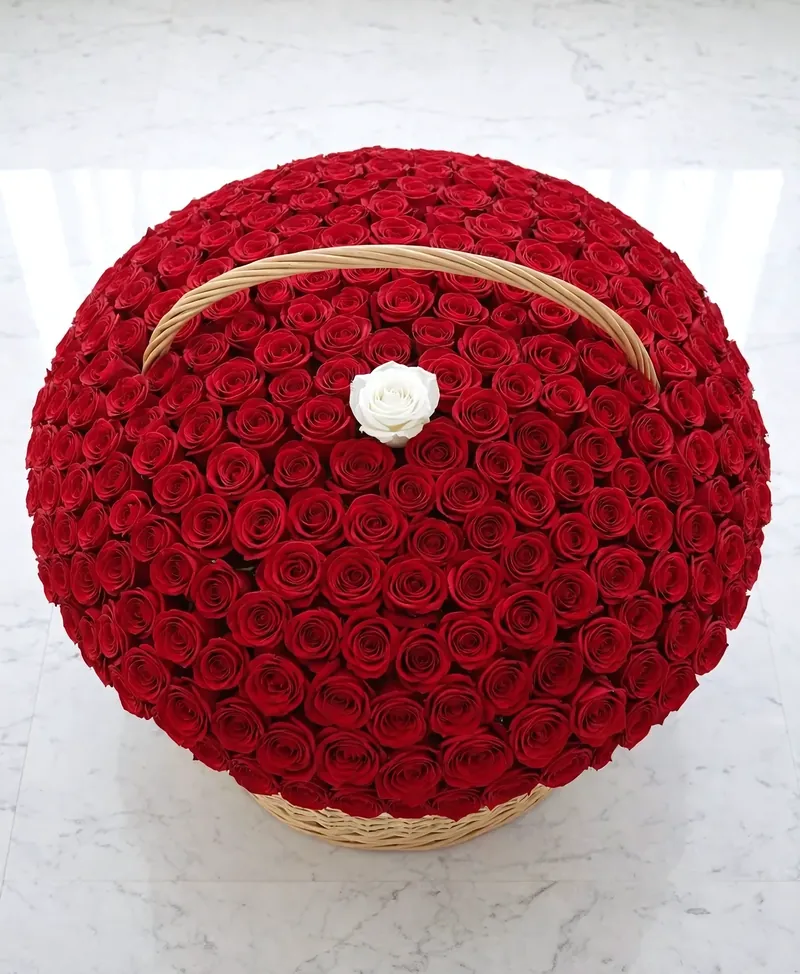
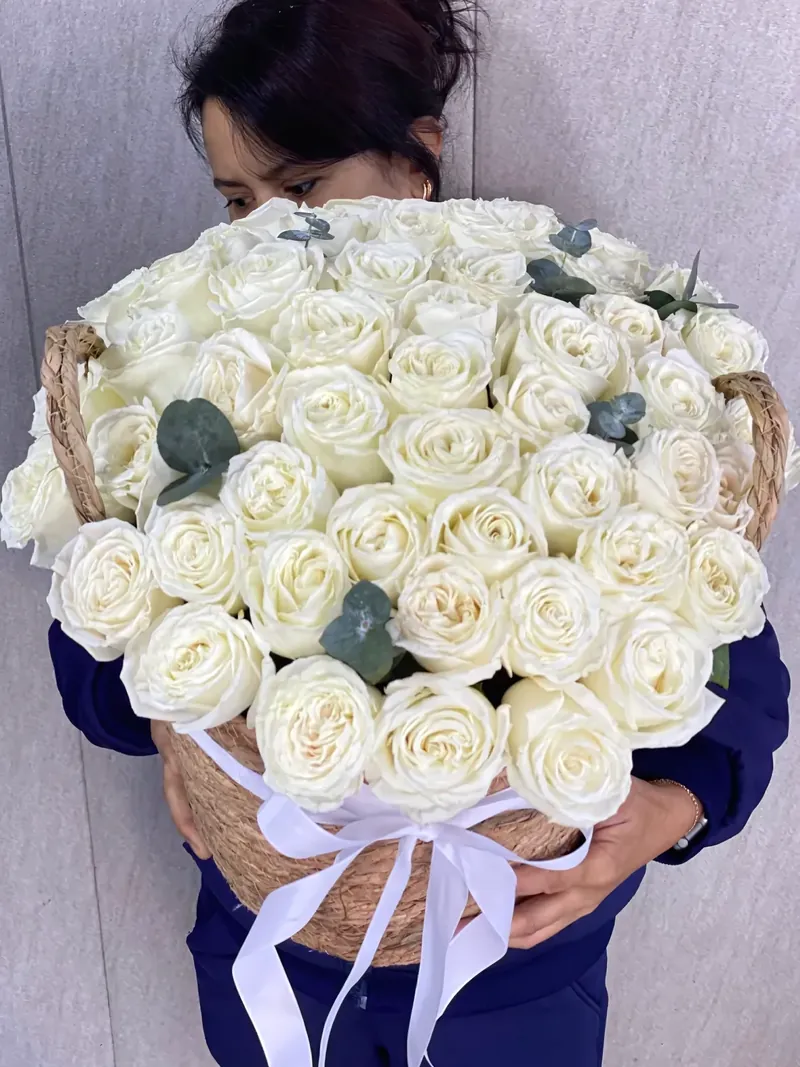
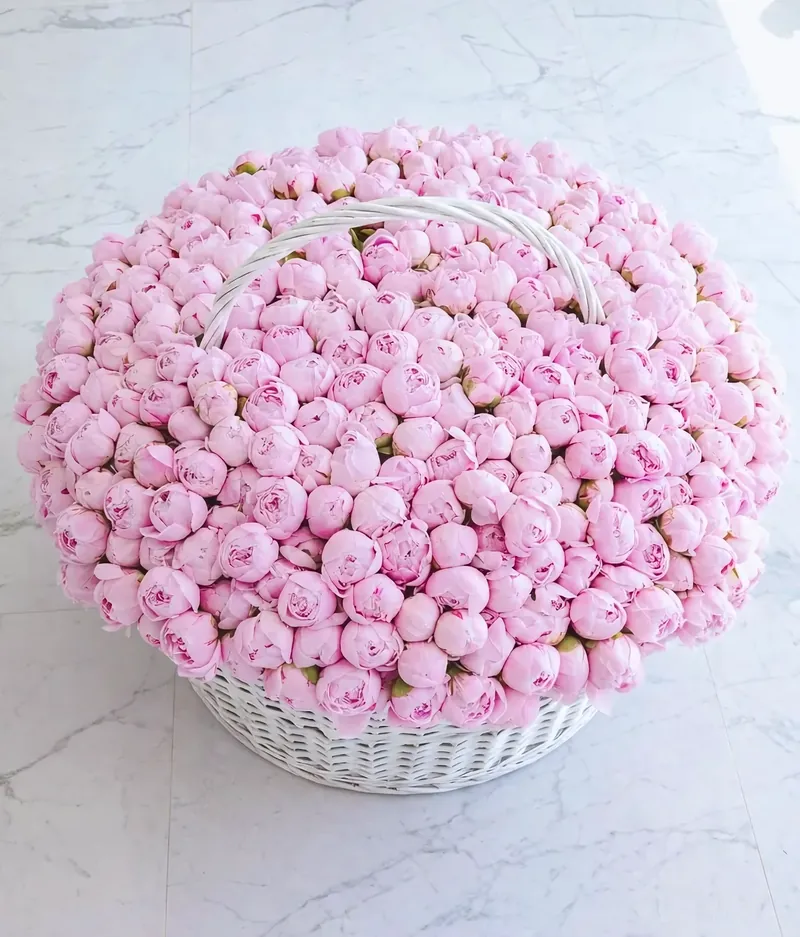
- A basket with flowers. It looks luxurious, and it can be supplemented with non-standard elements. For example, sweets or a soft toy.
- A bouquet with candies. In this version, the sweets are attached to skewers and inserted among the stems.
- With fruits. Bright fruits are put on skewers, gathered into a bouquet, and decorated with flower buds.
- In a hat box. Flowers on floral foam soaked in water are placed in a fairly tall box.
- In an envelope. A small bouquet on piaflor peeks out coquettishly from a large, sturdy envelope.
- A bouquet-box. It combines buds and sweets in a low box.
Bouquet-box
Now you know how many types of bouquets made of fresh flowers exist. If you already want to present your beloved not with the standard 5/9/15 roses, but with a small work of art, contact our florists — they will be happy to apply their talent.