Why should bouquets of freshflowers be arranged by florists
Floristry — a beautiful profession that is in demand. But there are still those who consider the cost of a professionally arranged bouquet unjustified. You've also heard these claims that putting flowers together in a bunch and tying them with a ribbon — "doesn't take much brains," right?
Well, it does! And today we'll tell you why. You'll learn what subtleties about flowers and their combinations you need to know to assemble a bouquet. And why "compositions" bought at the market cause bewilderment in people with refined taste, and last no longer than three days in a vase.
Quality of flowers
At the floristry courses that we organized at Pro-buket, future craftswomen study dozens of topics. Among them:
- basics of botany;
- seasonality of plants;
- basics of composition;
- color theory;
- working with volume and proportions;
- choosing suppliers;
- processing flowers after purchase, care;
- techniques for arranging bouquets of fresh flowers…
That's not even half the list.
The most pragmatic ones have surely noticed the topic "choosing suppliers." Florists and flower shop owners are very picky in this matter. They look for companies that take transportation seriously: monitor the maintenance of optimal temperature, proper unloading (without sharp temperature changes), and pay extra for fast border clearance. As a result, plants arrive on the florist's table in good condition and stay fresh in the vase for a long time.
If you buy a cheap little bouquet on the street, the supplier was most likely chosen based on availability. How the flowers were stored after purchase and what they were treated with — that's also an open question. If the buds still look decent today, tomorrow the petals may start falling off them.
Dangerous neighbors
To assemble a bouquet of flowers, you need to know whether they go together. And we're not just talking about harmony and color theory. There are plants that affect each other badly.
For example, if you put a lily in the same vase with wildflowers, the exquisite beauty will feel magnificent, while her neighbors — poppies, cornflowers, daisies — will quickly wilt.
Daffodils release sap into the water that clogs the stems of other plants and prevents them from feeding properly. They are not recommended to be combined with any other flowers.
In our catalog you'll find luxurious compositions with daffodils and ask: "How come? Don't you have experienced florists working for you?"
Exactly, we do have experienced florists. And they know: if you put daffodils in a separate vase for a day, most of the thick sap will come out of the stems, and then they can be combined with other flowers.
How do you make bouquets if you don't know that lilies of the valley, orchids, mignonette, and sweet peas also have similar aggressive properties? Each of these plants requires a special approach and the right combination.
It's irresponsible to assemble a bouquet of lilies of the valley and tulips. Yes, it will look delicate and spring-like, it will definitely sell, but the flowers will wilt very quickly.
But geranium, cypress, and jasmine disinfect the water they stand in, and thus extend the life of other flowers.
How to properly assemble a bouquet of flowers from a color theory perspective
A competent combination of shades — is one of the main conditions for a harmonious bouquet. All florists, designers, makeup artists, and artists study the color wheel and its properties.
It has seven colors of the rainbow and many shades that can be combined in four main ways.
- Contrast. As a rule, shades that are located opposite each other on the wheel go well together.
- Analogous scheme. Buds of shades located next to each other are combined in a bouquet (for example, yellow and orange).
- Monochromatic harmony. A combination of buds of one color but different shades.
- Polychromatic scheme. It can also look harmonious, despite being a variegated combination without regard to the rules of the wheel. It works great with bouquets of wildflowers.
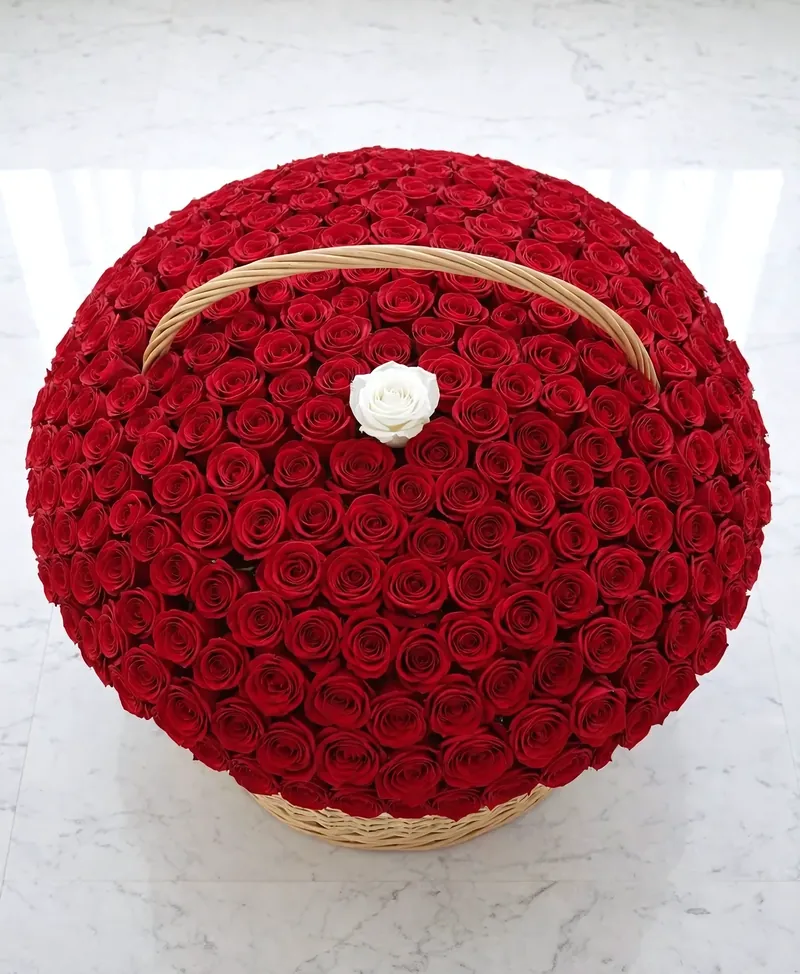
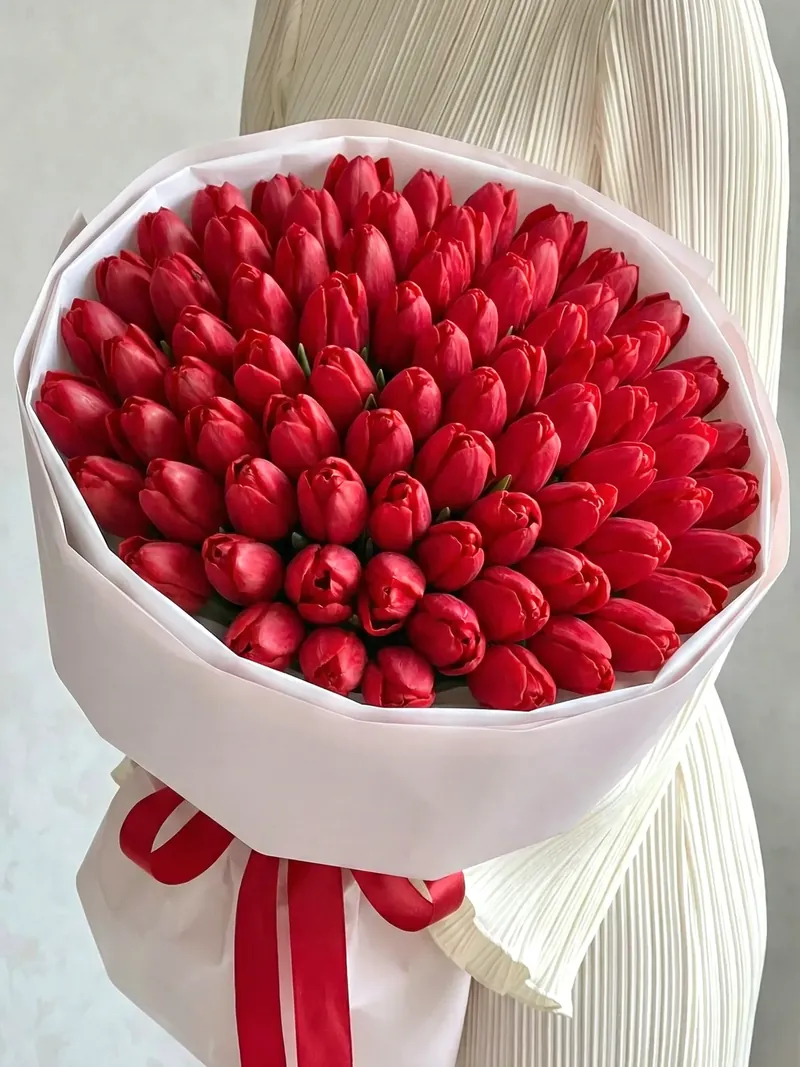
Monochromatic red bouquet
How to make trendy bouquets of flowers
Yes, there is fashion in floristry too. And it changes. And you need to keep up with its trends.
Florists who love the profession engage in self-education: they read industry publications, attend exhibitions and master classes. They will never assemble you a bouquet of scarlet roses and large white chrysanthemums. After all, any modern beauty will only scoff at such a combination. It's unfashionable, and you can only buy something like that in an underpass or in a cheap shop that hires not florists but salespeople.
The combination of roses with gypsophila is also considered old-fashioned. But a mono-bouquet of gypsophila — that's modern, delicate, beautiful.
Packaging made of cellophane (film) and mesh has long been outdated. Today, eco-friendly materials that decompose quickly in nature are popular — such as kraft paper, cardboard boxes, paper envelopes. An abundance of decor (beads, rhinestones, butterflies) is also not popular — minimalism rules.
That's how much a good florist must know and be able to do!
And we haven't even talked here about different techniques of assembling bouquets, their types and shapes. There's a separate article about that, "Types of Bouquets."
Order flower compositions from professionals: let them delight you and your loved ones with beauty and harmony for a long time.