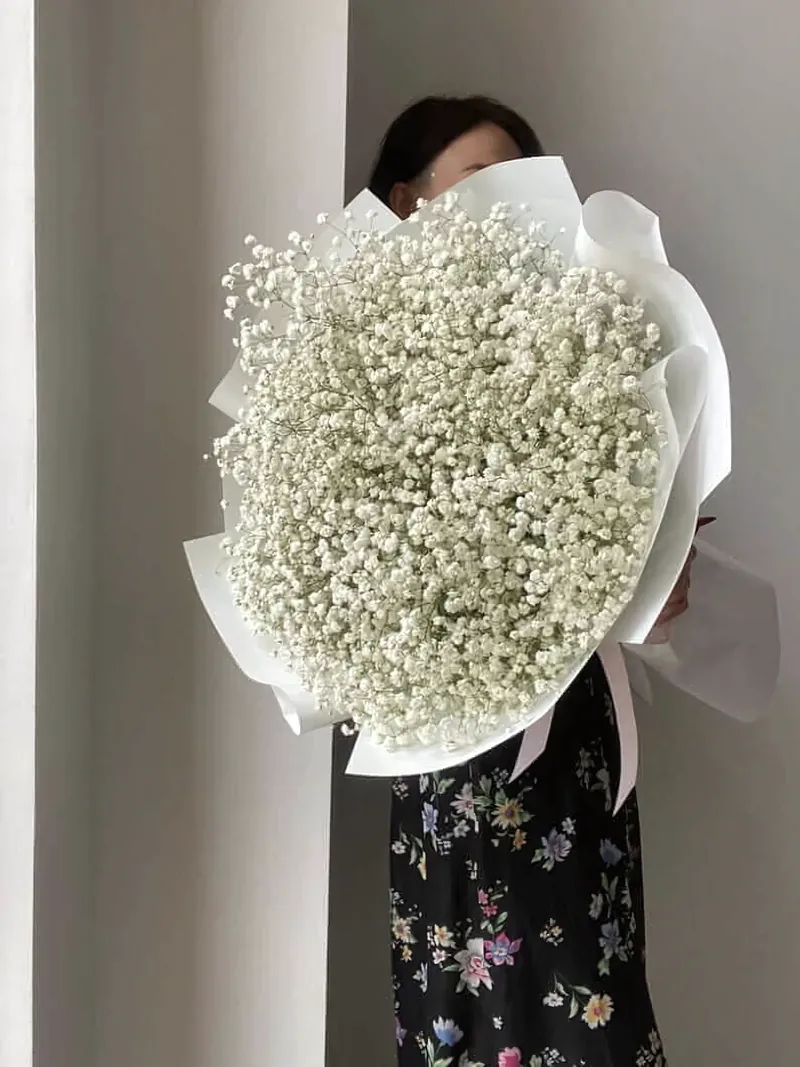
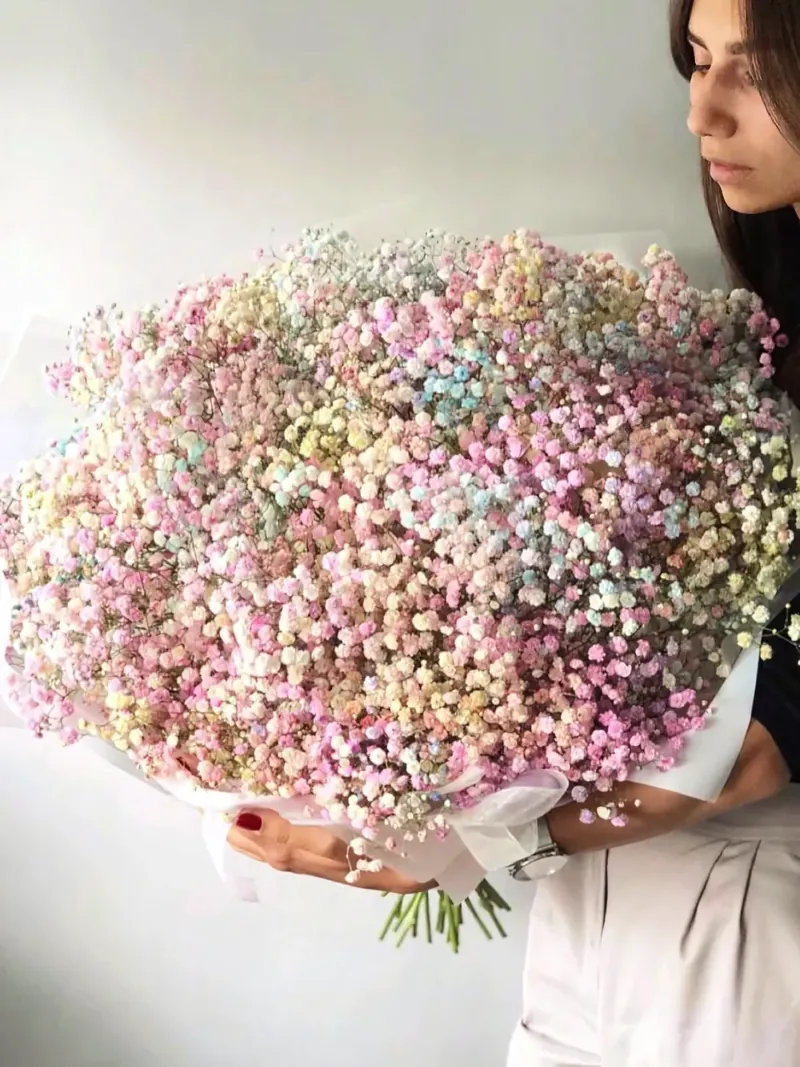
Composition of gypsophila
Gypsophila — 5 pcs
Gypsophila — 5 pcs
Gypsophila — 15 pcs
Gypsophila — 1 pcs
Gypsophila — 25 pcs
Gypsophila — 7 pcs
Gypsophila — 15 pcs
Gypsophila — 25 pcs
Gypsophila — 25 pcs
Gypsophila — 7 pcs
Gypsophila — 5 pcs
Gypsophila — 15 pcs
Gypsophila — 25 pcs
Gypsophila — 7 pcs
Gypsophila — 11 pcs
Gypsophila — 1 pcs
Gypsophila — 25 pcs
Gypsophila — 15 pcs
Cotton, gypsophila — 5 pcs
Gypsophila — 35 pcs
Gypsophila — 51 pcs
Gypsophila — 7 pcs
Gypsophila — 13 pcs
Gypsophila — 15 pcs
Gypsophila in Almaty from Pro-Buket means cloud-like bouquets assembled by our florists in the salon and delivered by Pro-Buket couriers at the exact time, including at night. Before dispatch, we send you a photo of the bouquet. Delivery by zone starts at 2,500 ₸, pickup is free, and the salon is open daily, 9:00–24:00. We are the direct provider, not an aggregator.
The lushness of a gypsophila arrangement depends on the number of stems and the size of the blooms. Here's how that relates to the price and why you should check the cost of a specific bouquet in the catalog listing.
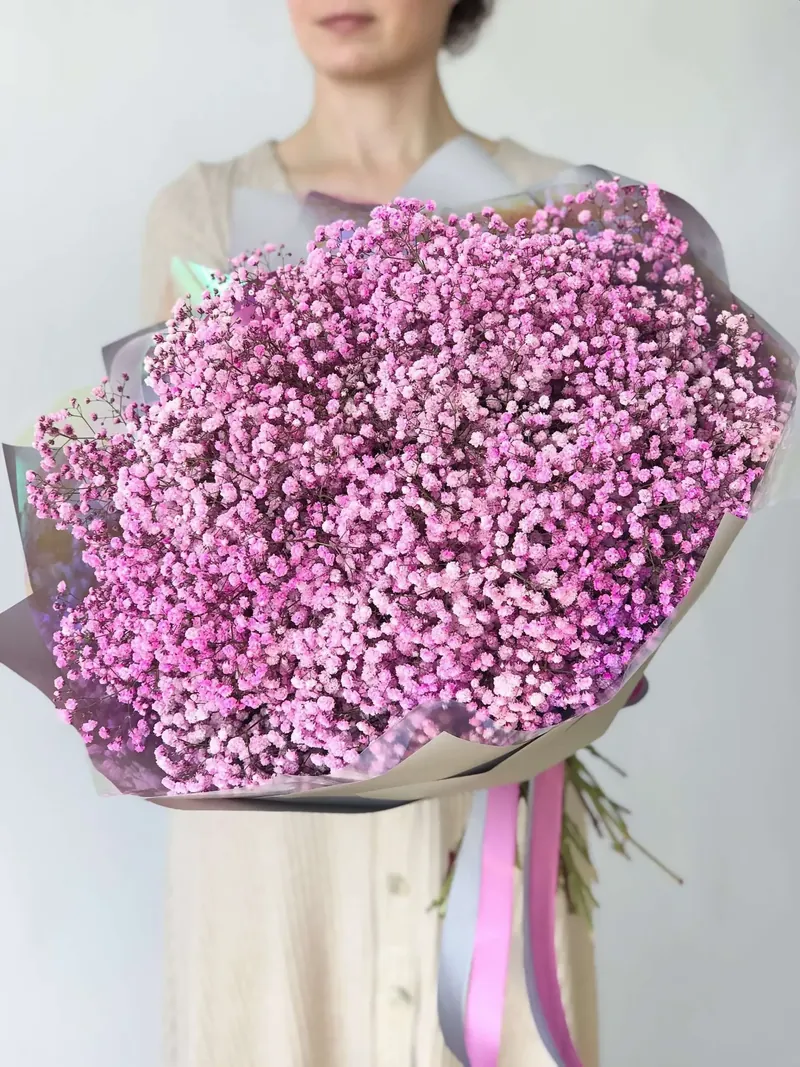
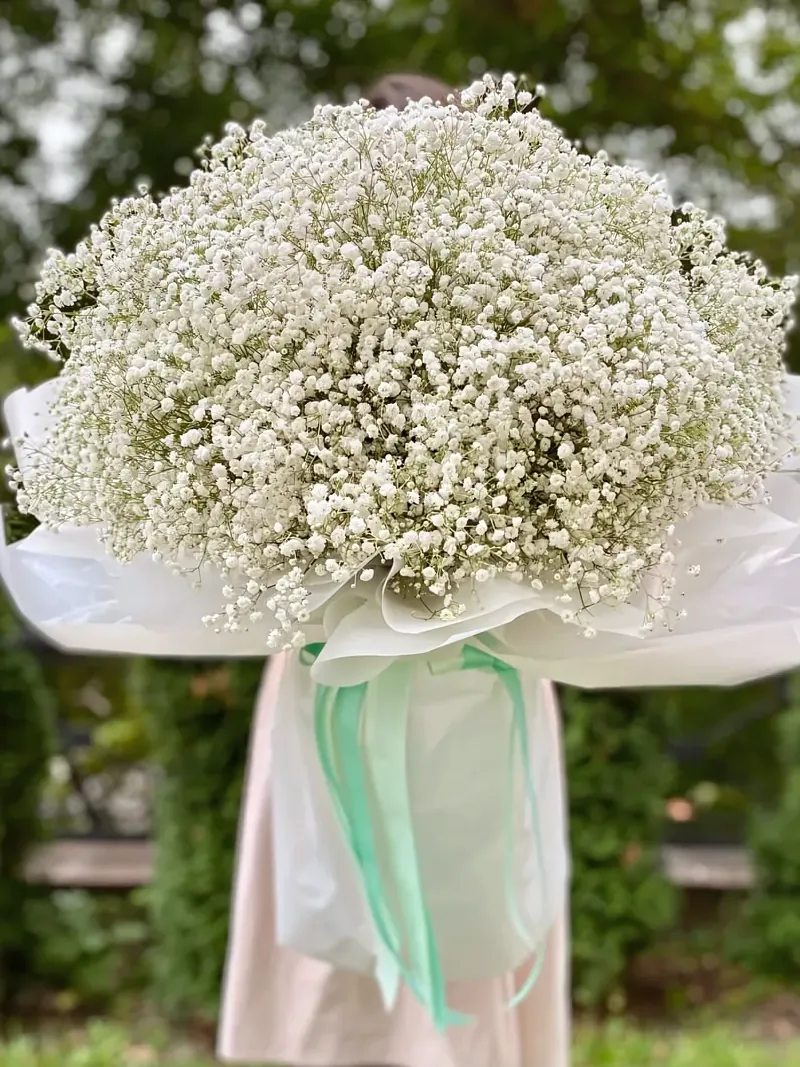
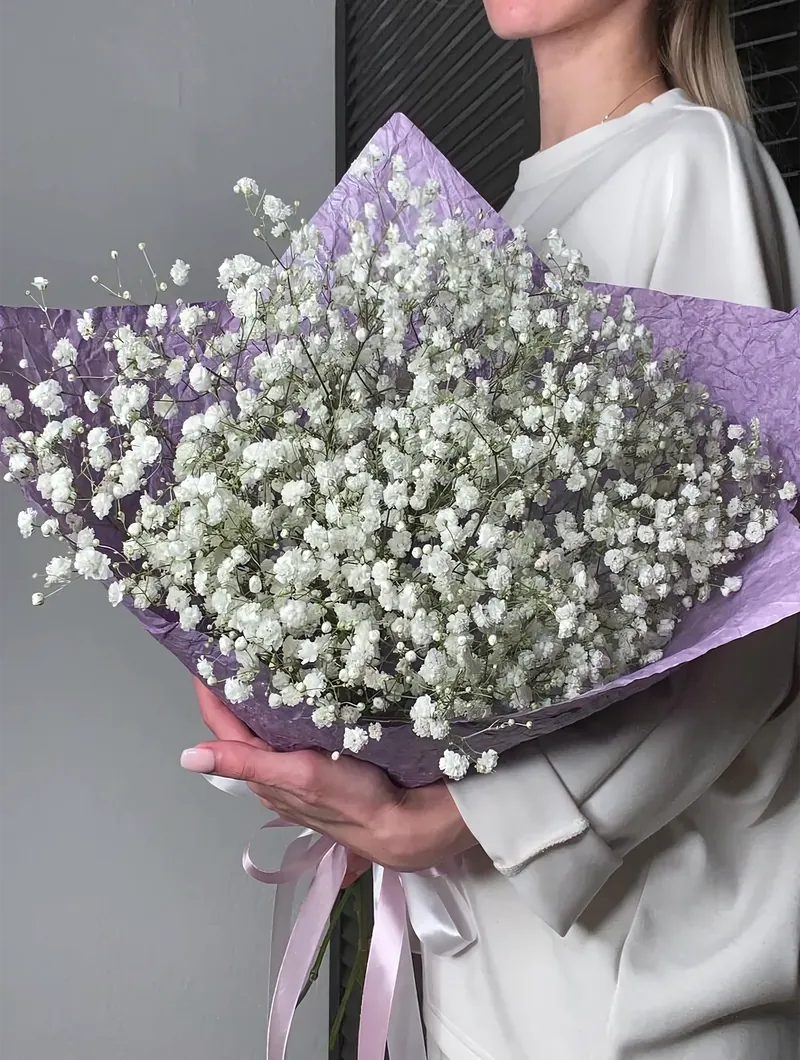
As a rough guide, a dense "cloud" in a single-variety bouquet needs 15–20 stems, while a light, airy one needs 7–10; the exact number depends on the size of the blooms and how densely the stems are cut. With the Elegance variety, the blooms are larger and hold a dome shape, so 12–15 stems create a visually bigger volume than 20 stems of small-flowered stock. A 60–70 cm stem with side branches opens wider than a short 40 cm one, and with an equal number of stems, an arrangement made from longer stock looks about a third fuller. Lushness comes not only from quantity but also from how the florist fans out the stems — with the same number of stems, an arrangement built "into a dome" looks more voluminous than a simply tied bunch.
Gypsophila comes in natural white, natural pink, and tinted. Here's how these options differ in appearance and longevity, and which one suits a particular occasion and recipient.
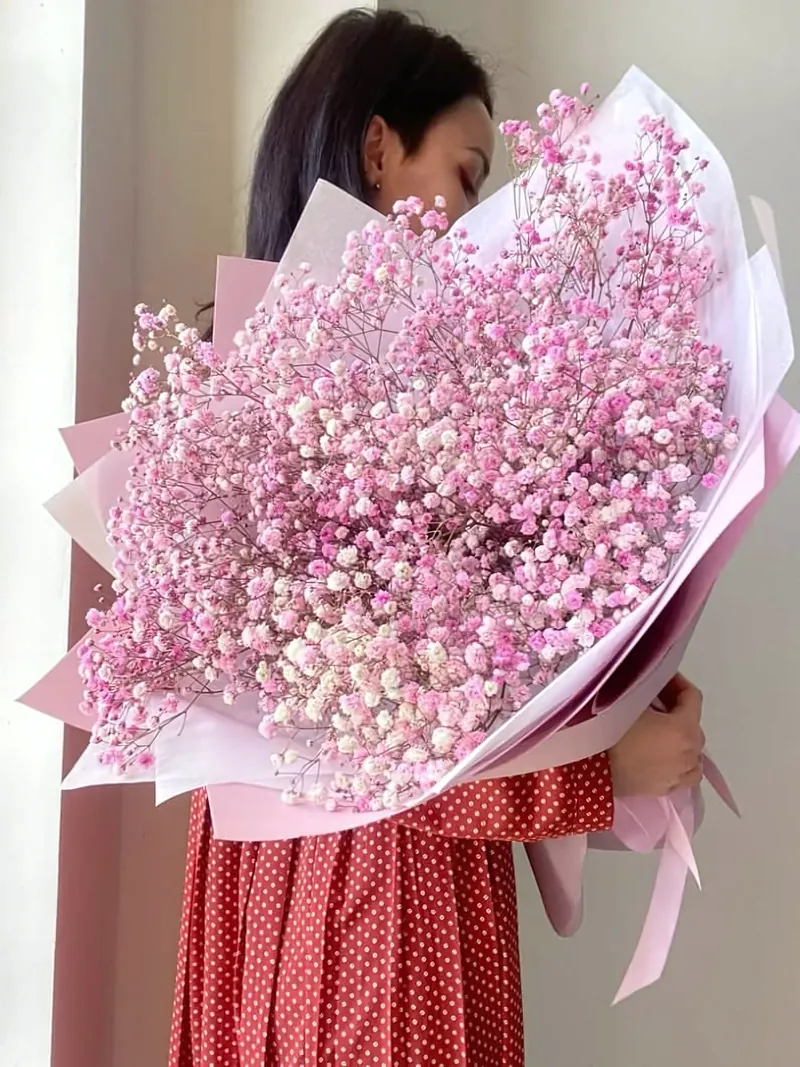
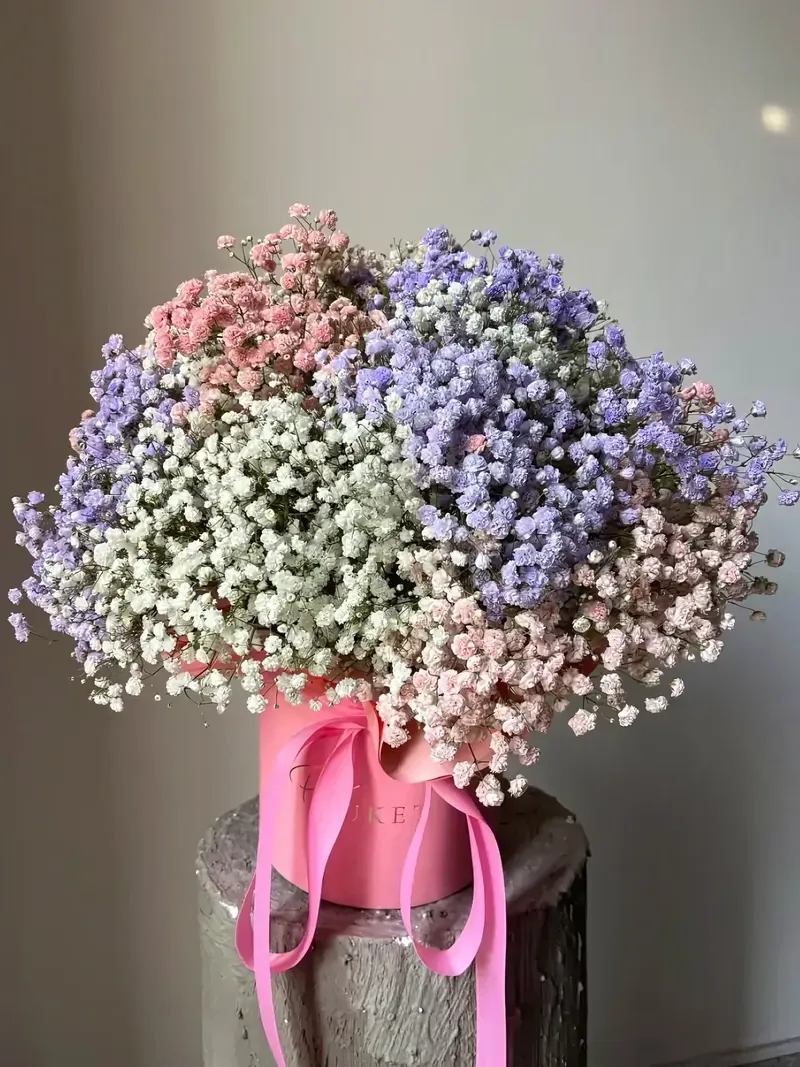
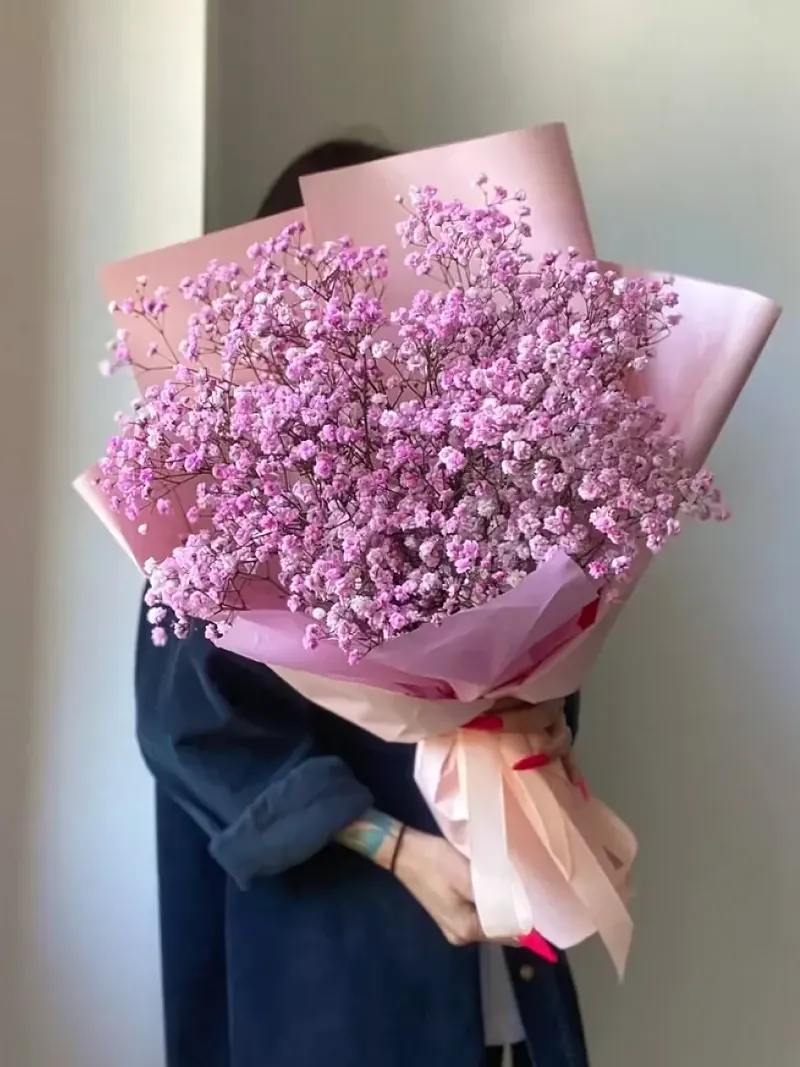
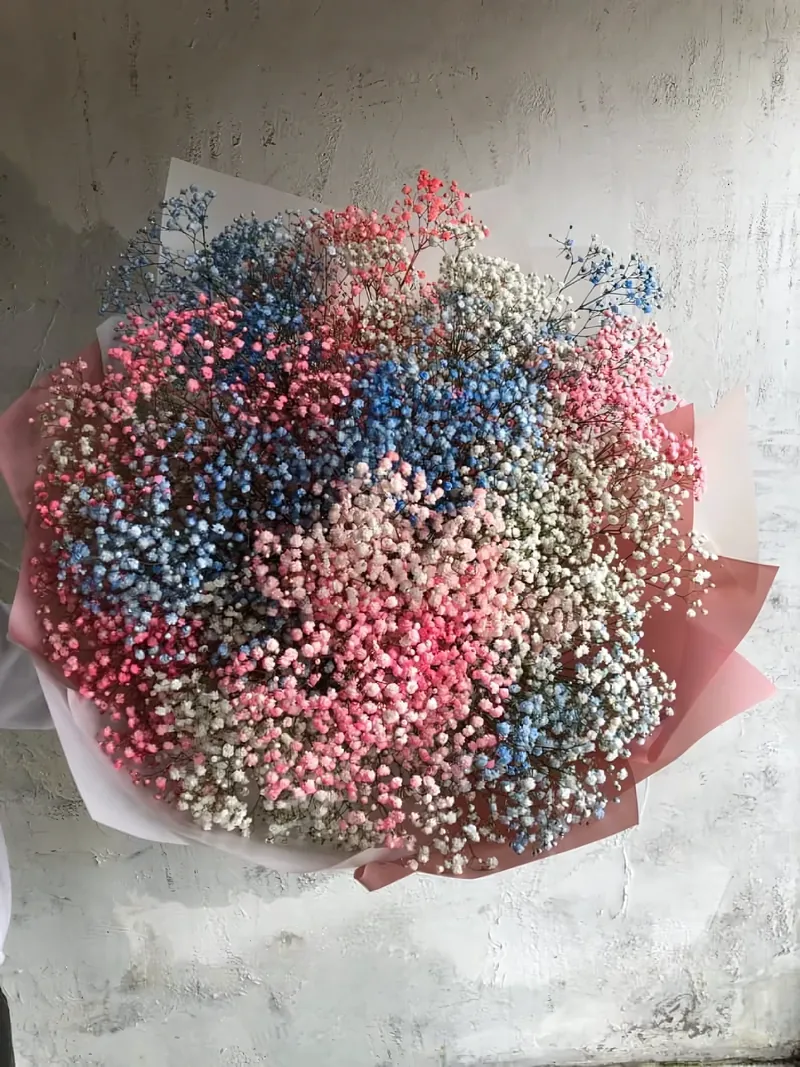
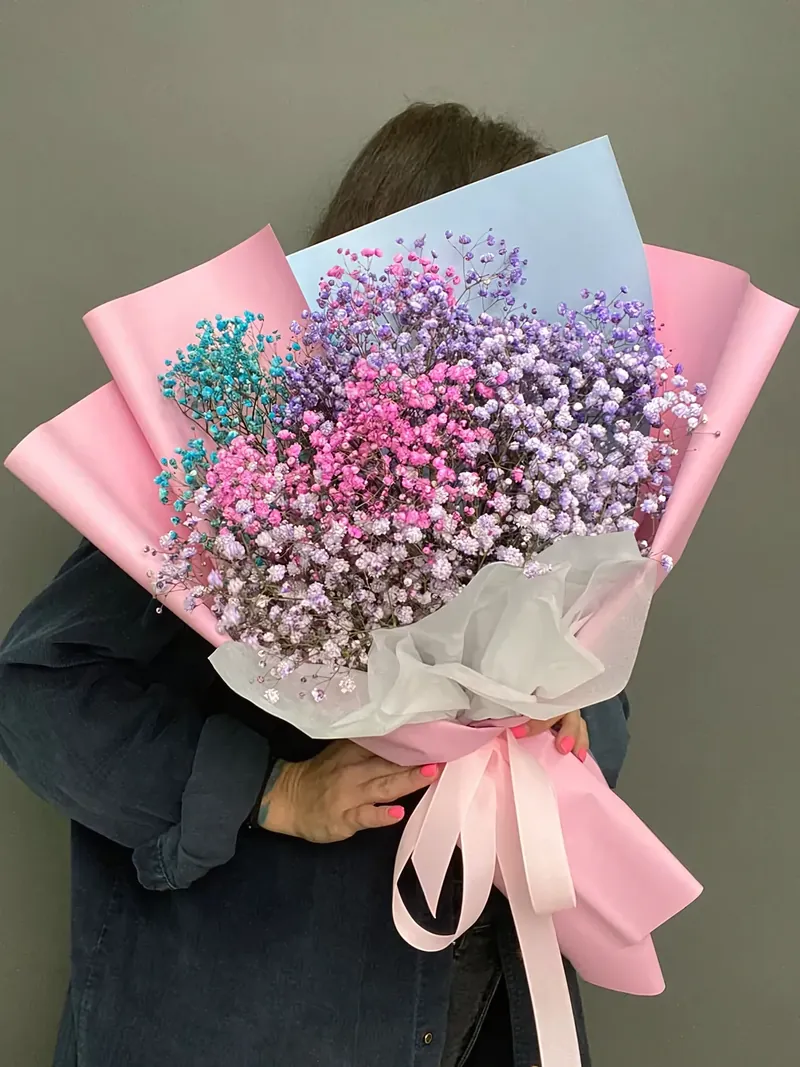
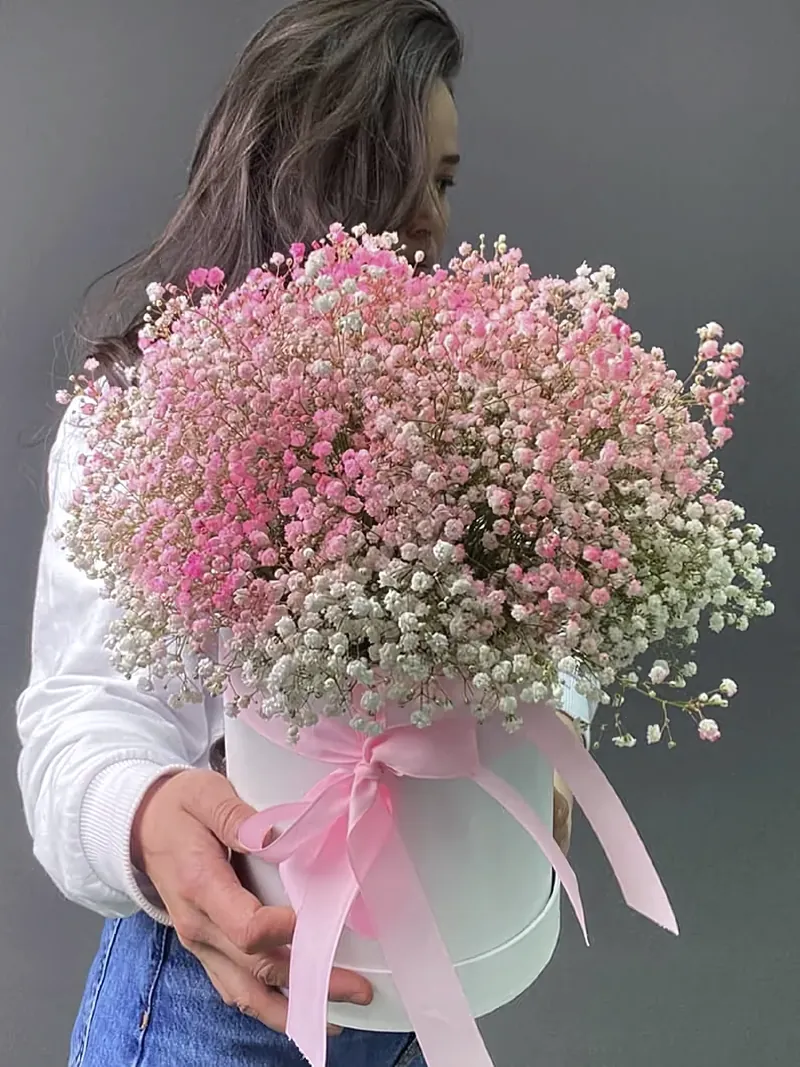
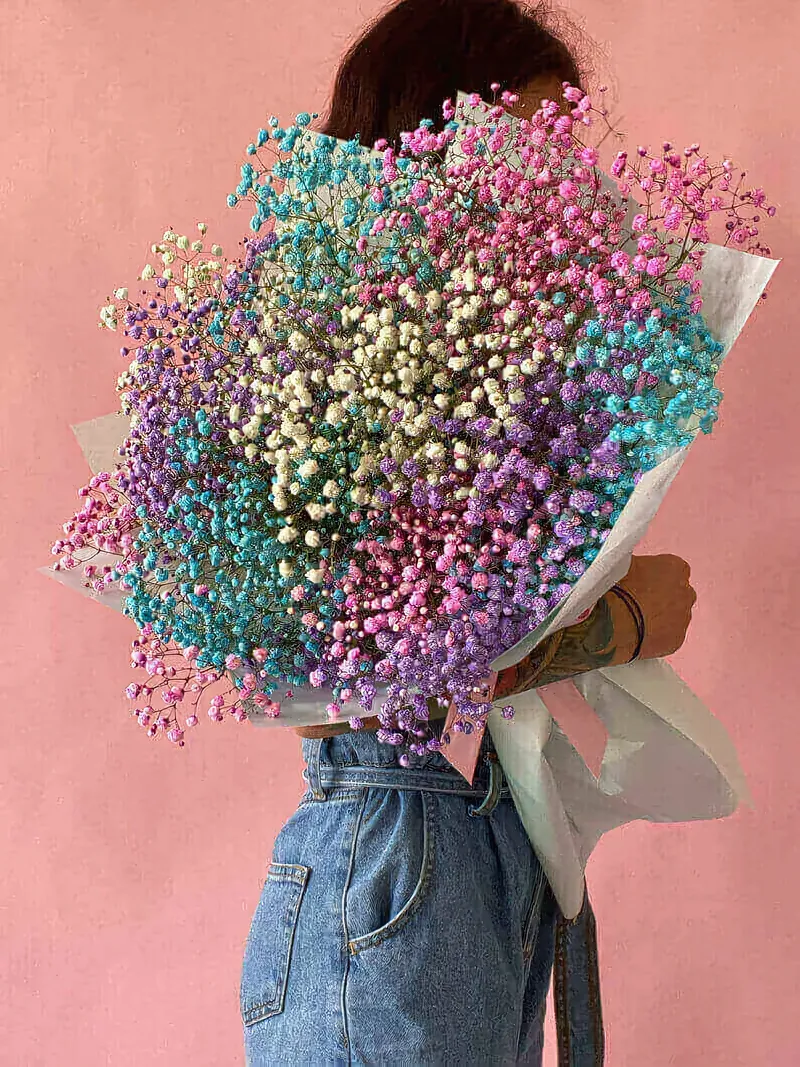
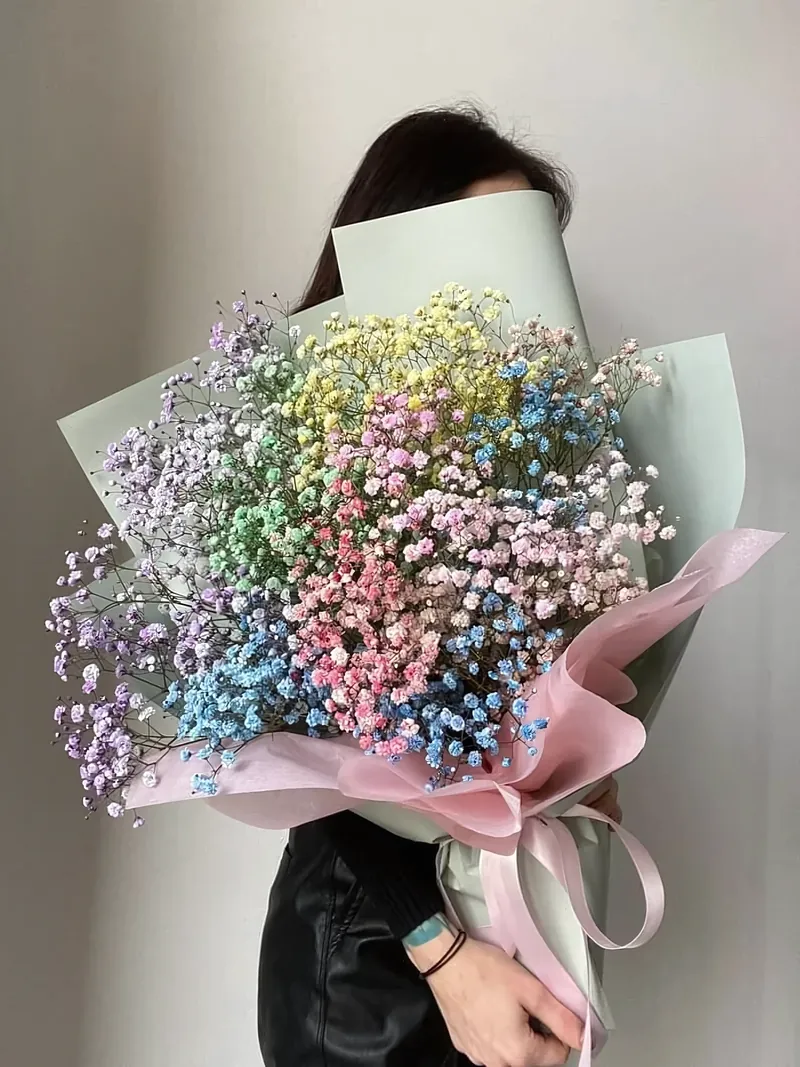
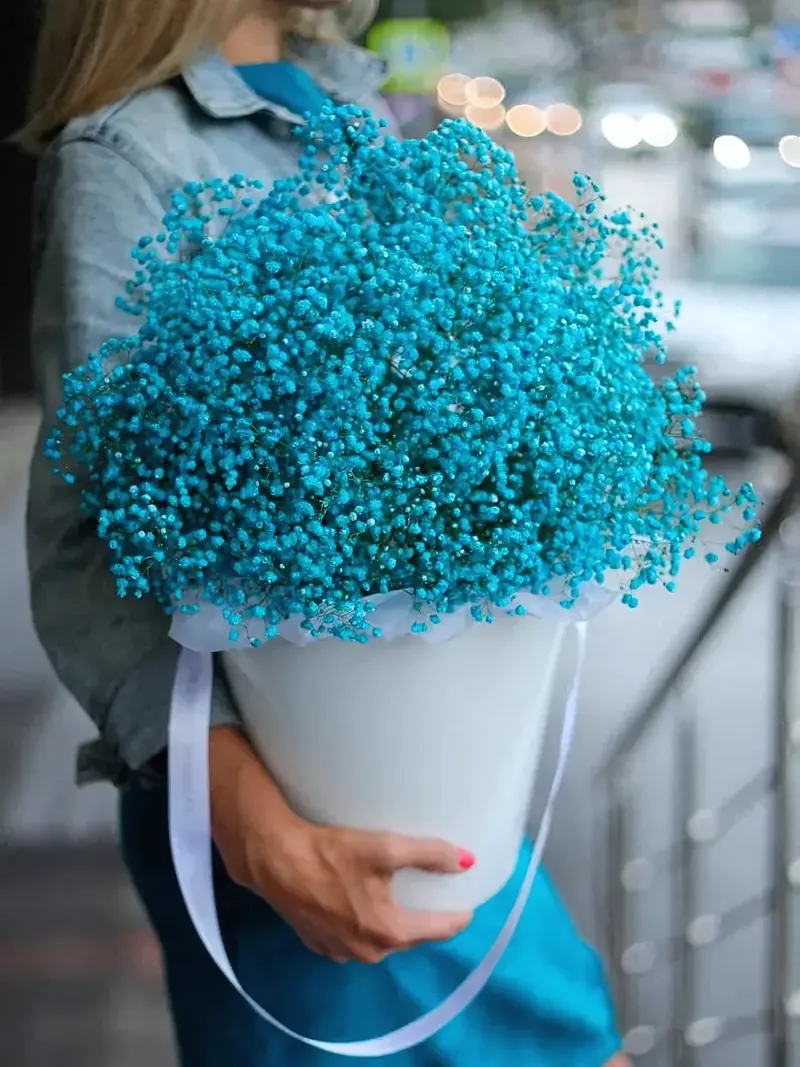
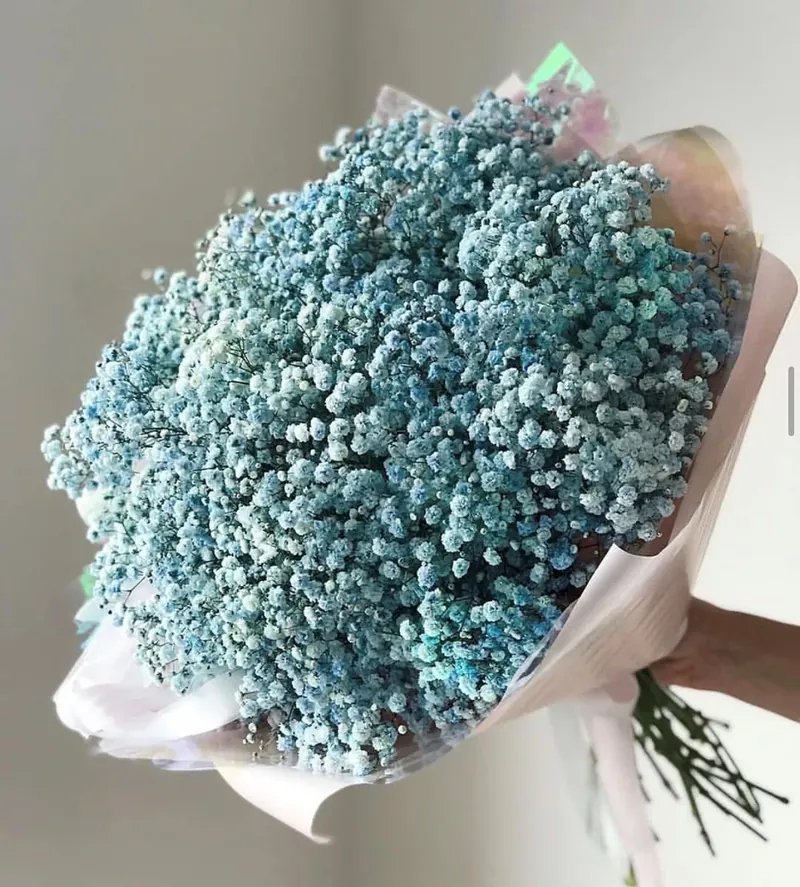
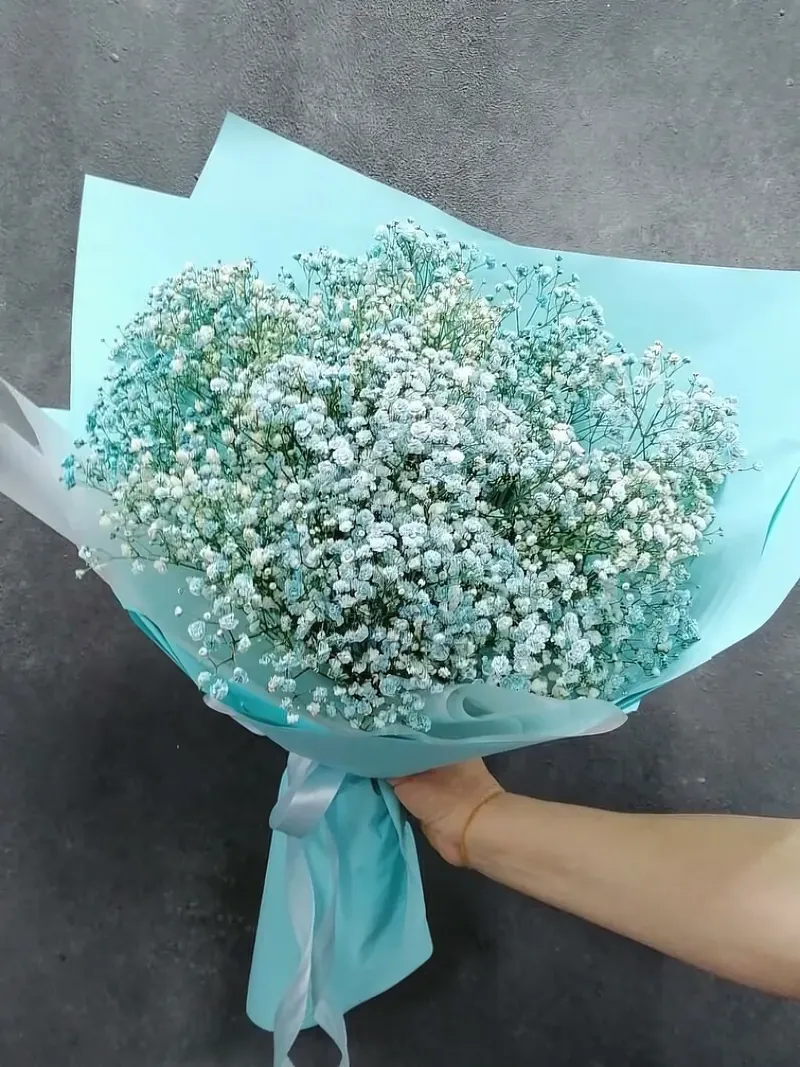
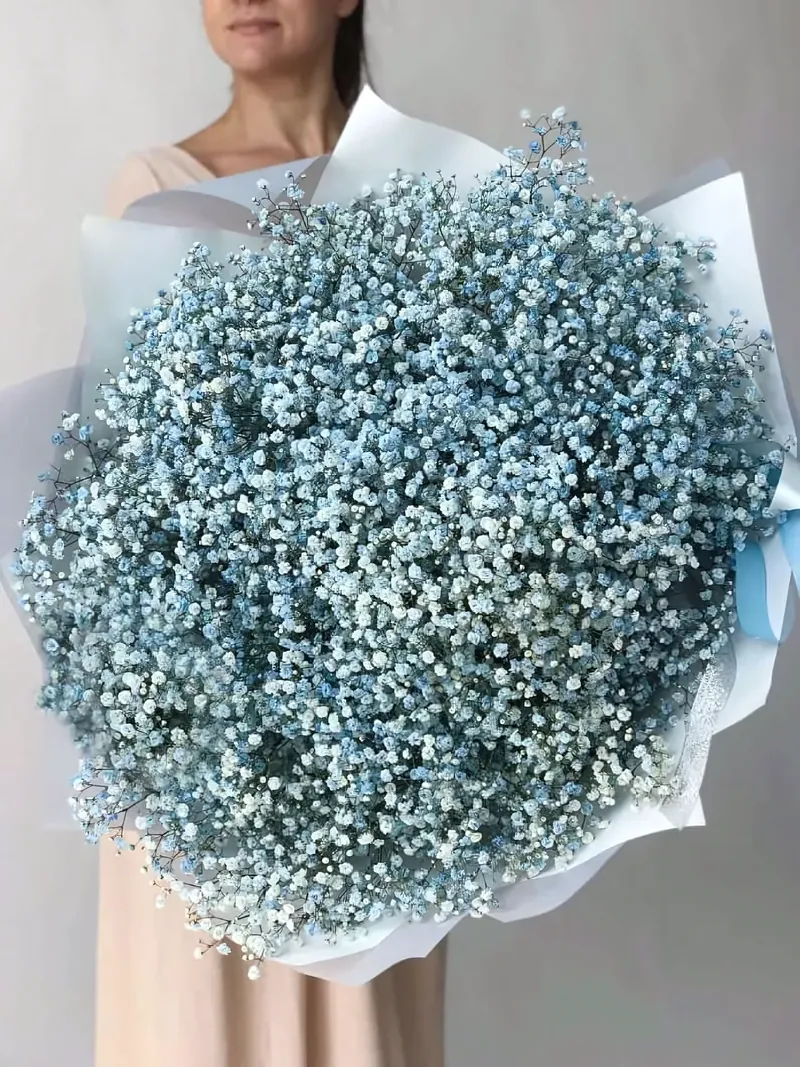
Natural gypsophila has a white or soft pink shade that comes from the flower itself, while tinted gypsophila gets a blue, lilac, or rainbow tone during stock preparation — over time, that shade may behave differently from a natural one. White varieties are dense "clouds" with small blooms; pink ones are softer in tone and slightly warmer in an arrangement. Tinted batches (blue, lilac, rainbow) are made from stems with open buds: the dye rises through the vessels and spreads unevenly across the blooms — at the edge of the "cloud," the shade is almost always lighter than in the center. In our experience, tinted ones more often show noticeable dryness at the edges by the third or fourth day, especially if they're kept near a radiator or in direct sun. For a classic gift, people more often choose natural — it looks calm and predictable; tinted is chosen when you need an accent to match the wrapping color or the occasion.
| Color | Occasion | Who it suits | What it pairs with |
|---|---|---|---|
| Natural white | birthday, thank-you, wedding | girlfriend, mom, colleague | roses, eustoma, greenery |
| Natural pink | romantic occasion, March 8 | girlfriend, mom | peony-shaped roses, chrysanthemums |
| Tinted (blue, lilac) | statement gift, graduation | girlfriend, colleague | white roses, greenery |
| Tinted (rainbow) | bright surprise, September 1 | teenager, child | chrysanthemums, greenery |
If you're torn between two shades, go with the one closer to the palette of the wrapping — that way the arrangement looks cohesive.
Freshness is visible in the flower heads and stems before dispatch. Here's how to check quality from a photo, how an arrangement handles heat and frost, and what happens if the recipient isn't home.
Before dispatch, we send a photo of the bouquet, and in heat or frost, delivery at an exact time helps — you pick the moment when the recipient is definitely home, so the arrangement isn't waiting outside. Photos are taken in daylight so you can see how open the flower heads are and the condition of the stems, not just the overall arrangement. In summer at +35, the courier carries the order in a thermal box; in winter at −20, the stems are wrapped in kraft paper and film so the flower heads don't dry out on the way. In extreme heat or frost, it's best to choose delivery closer to evening or for a moment when the recipient is already home — that way the arrangement isn't waiting outside or sitting in the car.
Gypsophila with delivery across Almaty is convenient to order when the zones, rates, and salon hours are clear in advance. Below are the published rates, schedule, and scenarios for night and anonymous delivery.
| Zone | Districts | Delivery cost |
|---|---|---|
| Pickup | salon | 0 ₸ |
| Zone 1 | Almalinsky, Medeusky | 2,500 ₸ |
| Zone 2 | Bostandyk, Auezovsky | 3,000 ₸ |
| Zone 3 | Nauryzbaysky, Alatausky | 4,000 ₸ |
| Zone 4 | suburbs | 6,000 ₸ |
The delivery cost is added to the order price, and pickup from the salon is free — 0 ₸.
We deliver the bouquet at an exact time, work daily, 9:00–24:00, and offer night delivery as well as delivery to the suburbs. Couriers travel to Bostandyk, Auezovsky, Nauryzbaysky, and Alatausky districts, and under the night rate — within the city after 22:00. If you need the arrangement for a specific moment — for example, the start of a celebration — it's best to specify the time when placing the order so the courier can plan the route. In our experience, for an order "by 19:00 for an anniversary," the courier sets out in advance with a 20–30 minute buffer for traffic on Al-Farabi Avenue. For the suburbs, allow a window 30–40 minutes wider — the road to Shanyrak or Talgar is unpredictable in the evening.
We can deliver an order anonymously, without naming the sender, and include a card free of charge. The courier hands over the arrangement without a word about who ordered it — the name is never mentioned, neither in the call nor on delivery. Florists sign the card by hand or print the text from the order comment. If you want to keep the surprise but still leave warm words, the card can be signed without a name — the recipient reads the message but doesn't find out who the gift is from. This format is often chosen for surprises for colleagues and for first dates.
Baby's breath in Almaty is often chosen precisely for its airy look, but the scent can often be a cause of disappointment: the arrangement looks light, yet the fragrance seems too sharp. Let's break down where it comes from and how to pick a composition if you want something softer.
The scent comes from the cut stems themselves: freshly cut flowers have a more noticeable fragrance, and in warmth or a closed room it feels stronger. Volatile compounds are released from the stem and flower heads — the higher the air temperature, the more actively they evaporate. In a cool room at +16…+18 °C, the arrangement smells restrained, while in a stuffy kitchen near the stove or in an unventilated bedroom, the same composition opens up sharply within a couple of hours. A dense mono-bouquet of 15-20 stems concentrates the fragrance more than a mixed one: here these flowers take up the entire volume, and the scent doesn't disperse. The variety also affects perception: white panicled baby's breath smells weaker than dyed stems — the dye and treatment add their own note. If you place the arrangement in a cool, ventilated spot away from direct sun, the scent becomes softer — this doesn't make the flowers worse, it just changes how they're perceived.
Baby's breath lasts longer in a vase if you prepare the stems properly, and after blooming you can dry it and keep it as a dried flower.
Yes, these flowers are dried naturally: gather the stems into a loose bunch, tie them at the base, and hang them upside down in a dark, ventilated place — a closet, a mezzanine, or under cover on a balcony. The flower heads hold their shape for 10-14 days and dry completely, keeping their white or pink hue. Direct sun and humidity spoil the result: under the rays the petals turn yellow, and in a damp room the stems get moldy. Dried baby's breath needs no water and lasts for years in interior arrangements — paired with lagurus, pampas grass, or dried roses, it holds volume and doesn't shed. This way the arrangement remains a reminder of the gift longer than it would simply in a vase.
We've gathered the main things to keep in mind before ordering: from the number of stems and the type of cut to home care. Below is a short list of takeaways without extra detail.
Message the florist: we’ll pick flowers, colour and quantity for your budget and send a photo before dispatch.
We usually reply within minutesDelivery city: Almaty?