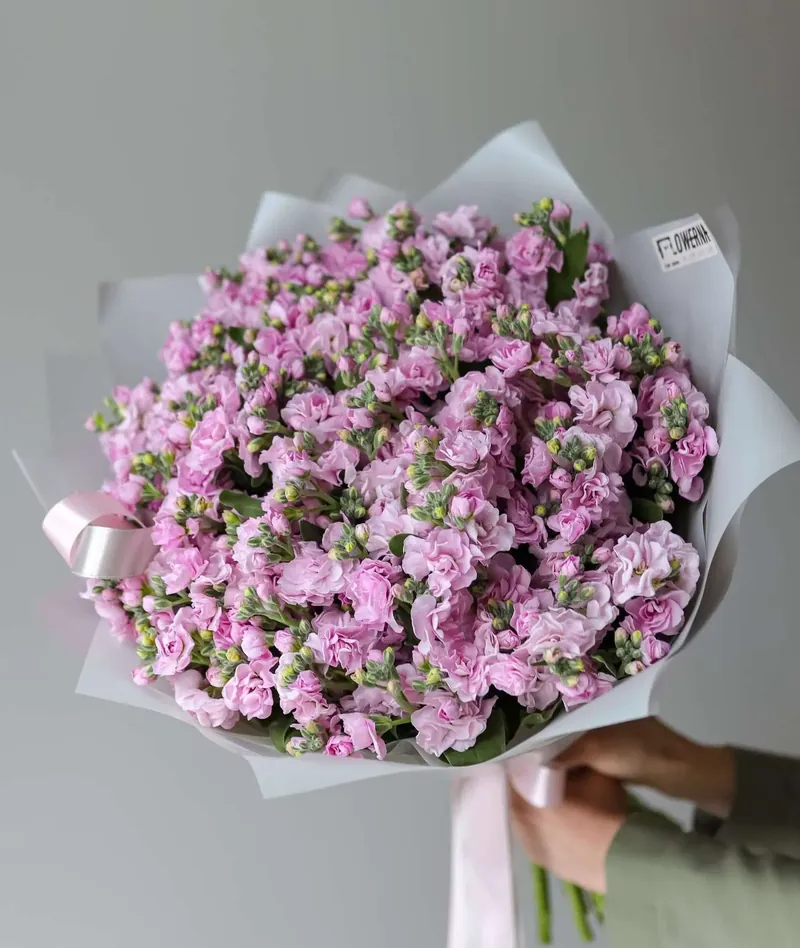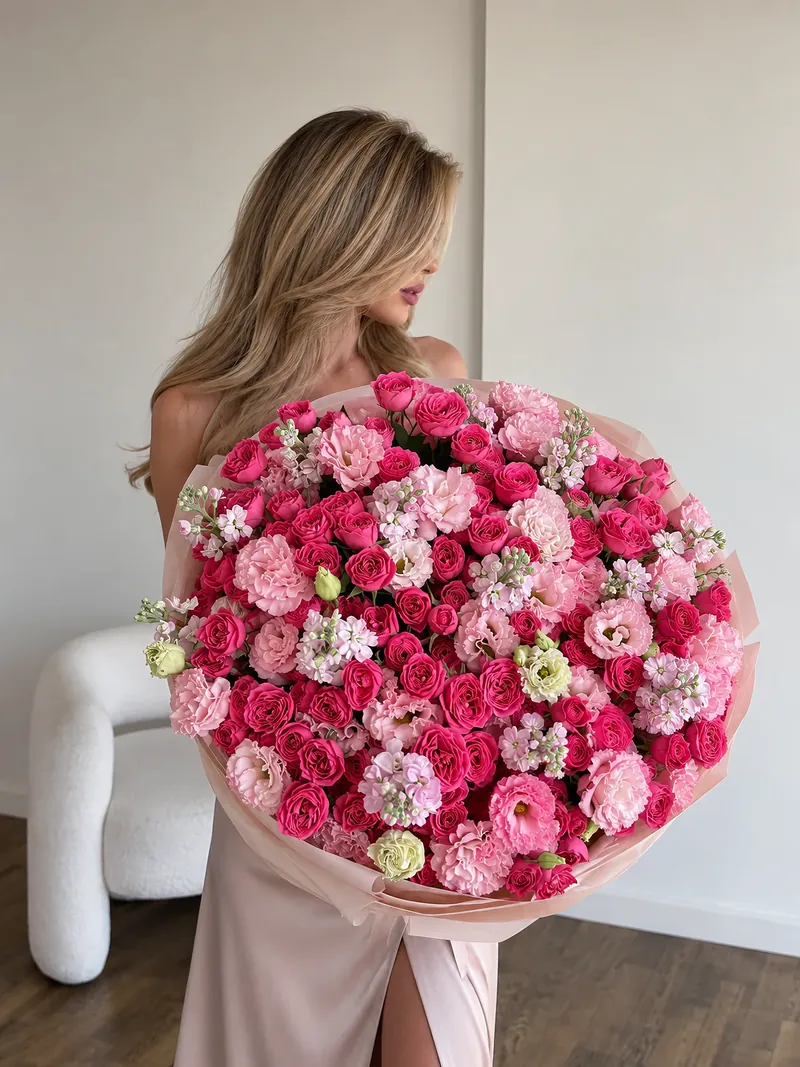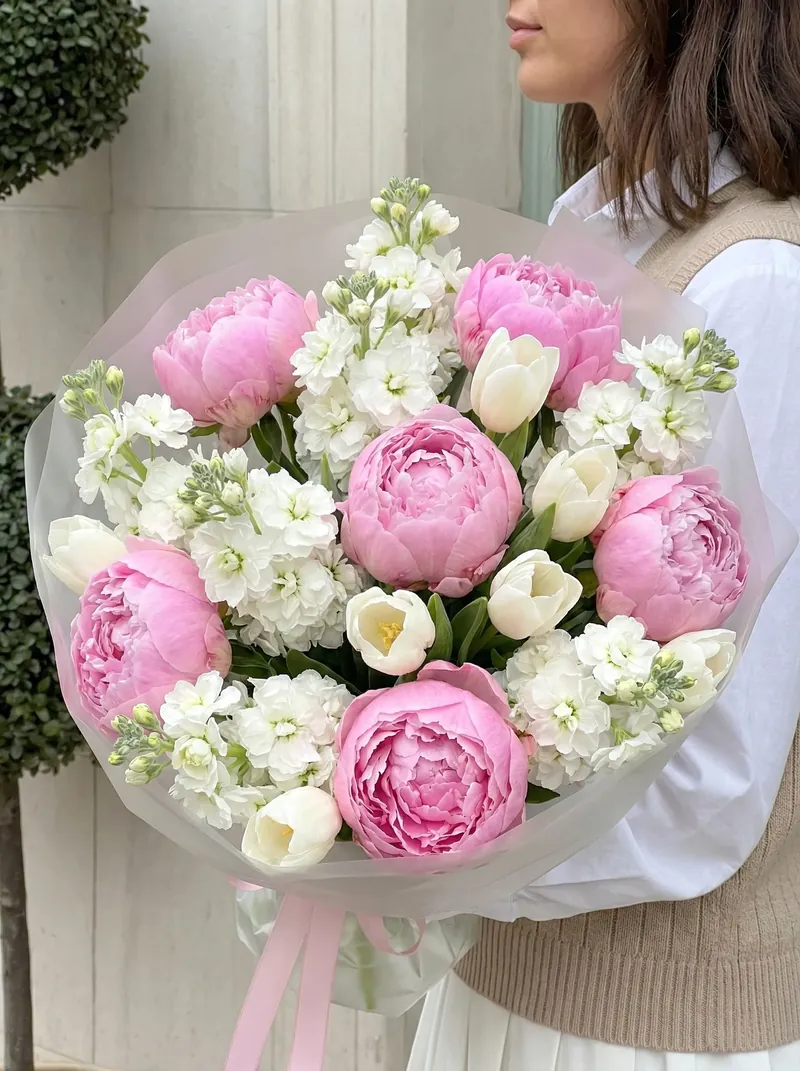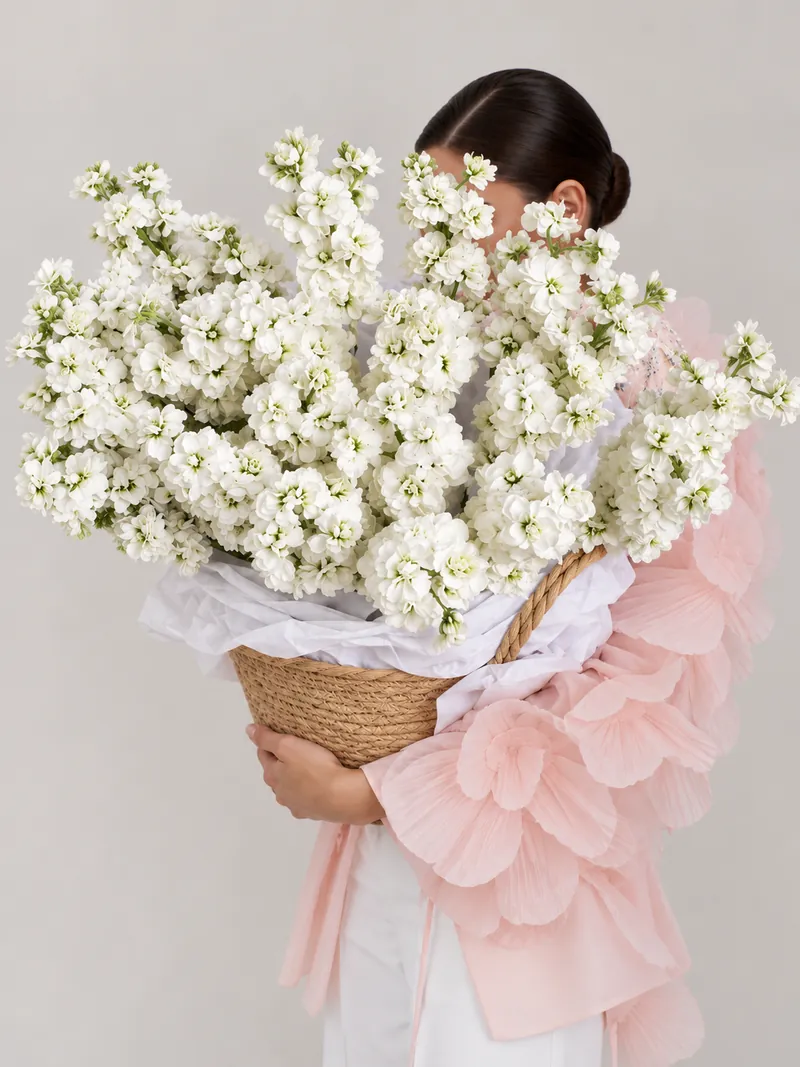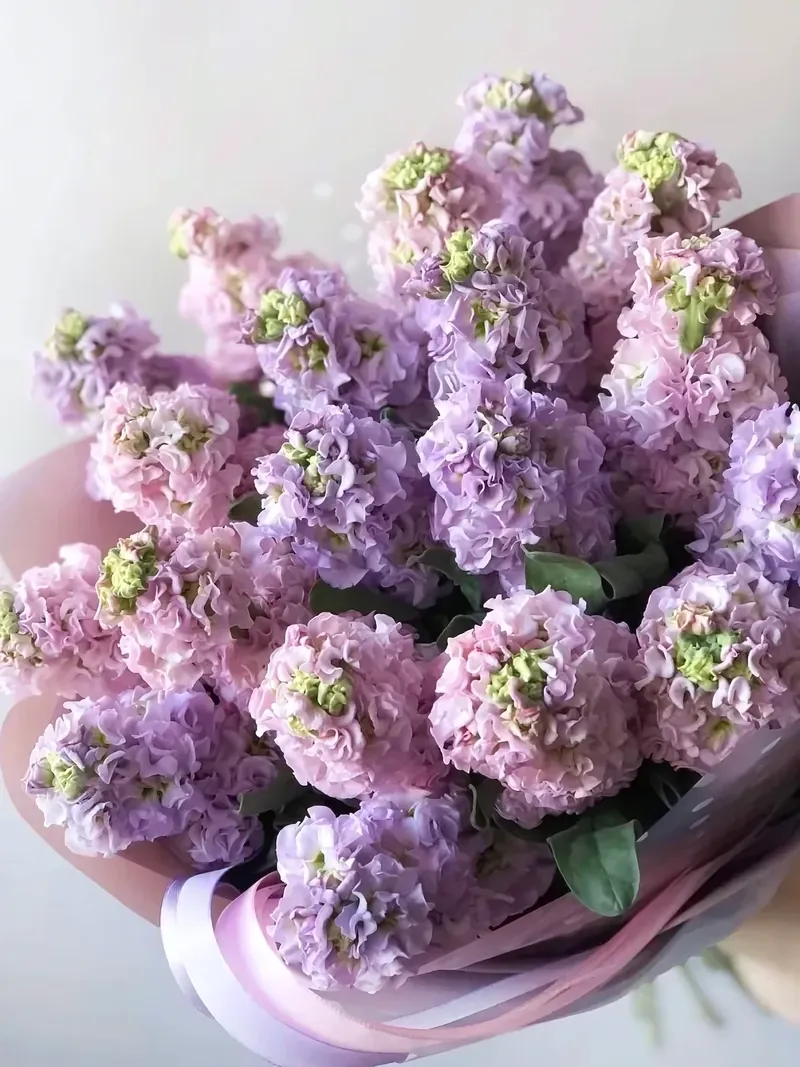
Bouquet of fragrant matthiola
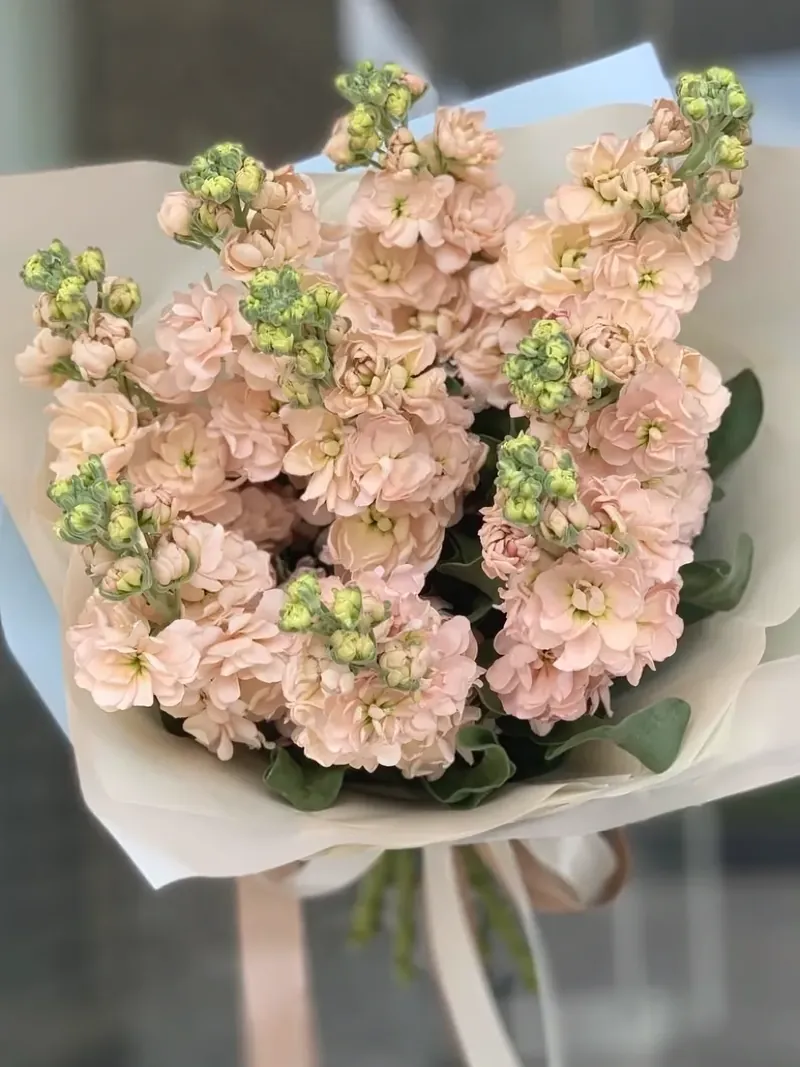
Matthiola — 19 pcs
Matthiola — 19 pcs
Matthiola — 11 pcs
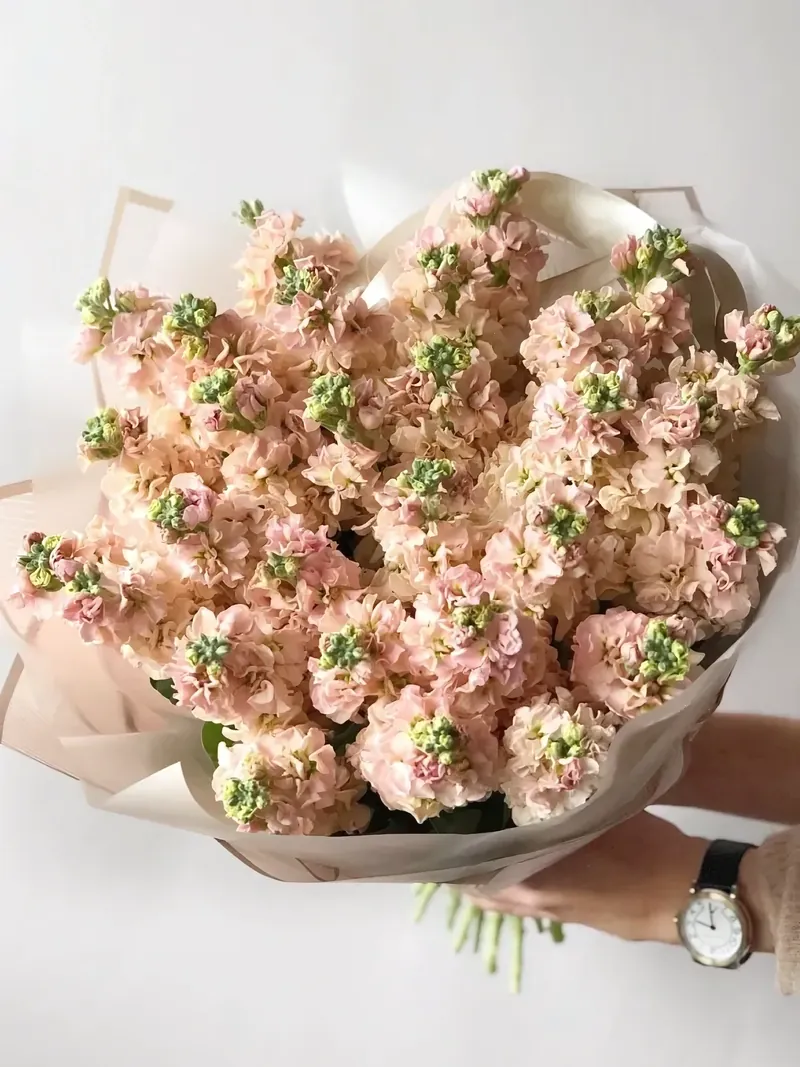
Matthiola — 29 pcs
Matthiola — 51 pcs
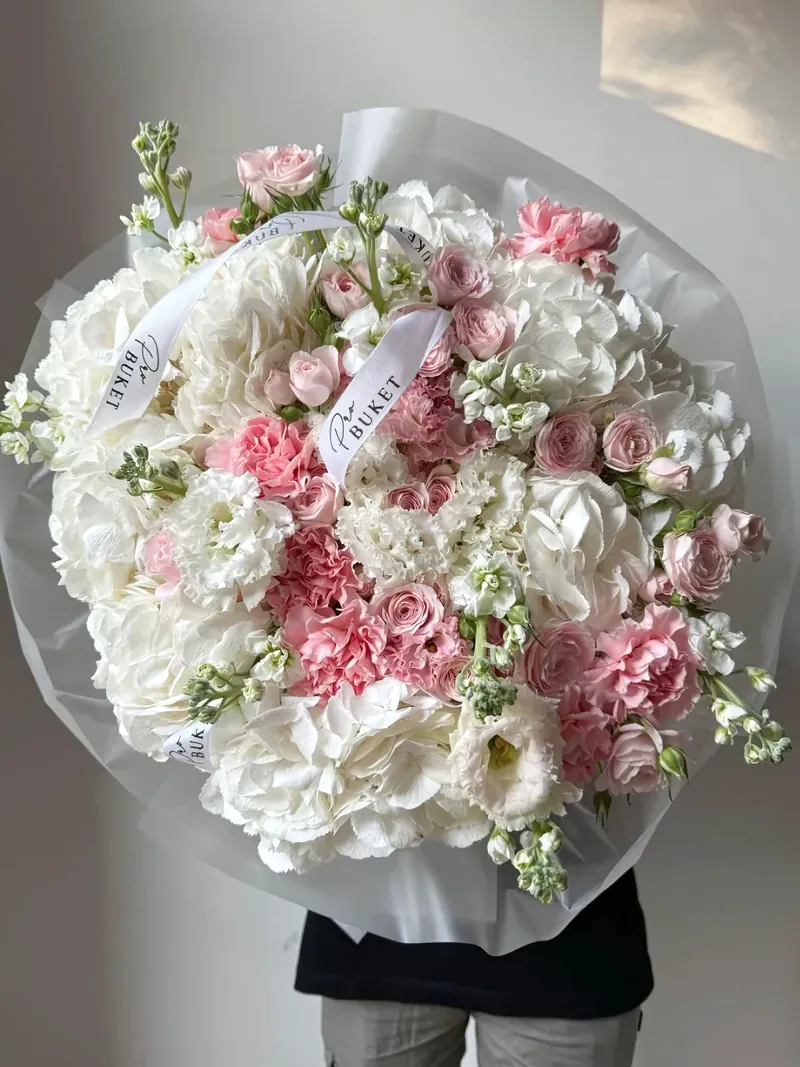
Hydrangea — 9 pcs, matthiola — 12 pcs, spray rose — 10 pcs, carnation — 7 pcs, lisianthus — 7 pcs
Matthiola — 13 pcs
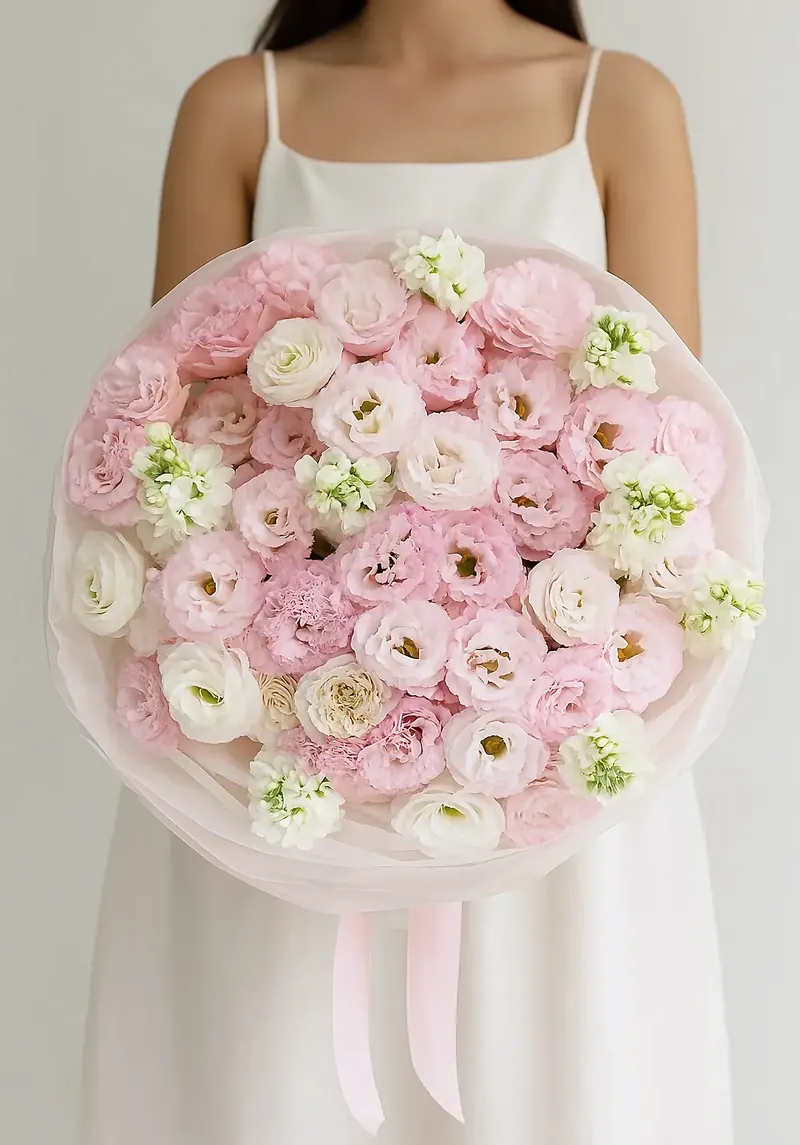
Lisianthus — 25 pcs, matthiola — 8 pcs
Rose — 1 pcs, spray rose — 5 pcs, matthiola — 3 pcs, chrysanthemum — 2 pcs
Matthiola — 21 pcs
Peony rose O’Hara — 1 pcs, matthiola — 7 pcs, rose — 4 pcs, lisianthus — 5 pcs, carnation — 6 pcs, orchid — 1 pcs, gypsophila — 3 pcs, bush rose Juliet — 4 pcs
Peony rose — 25 pcs, lisianthus — 12 pcs, carnation — 10 pcs, matthiola — 12 pcs
Peony — 6 pcs, matthiola — 6 pcs, tulip — 7 pcs
Matthiola — 25 pcs
Matthiola in Almaty from Pro-Buket means stock bouquets arranged by our florists in our own salon and delivered by Pro-Buket couriers at the exact time. Before dispatch, we send you a photo of the bouquet. We work daily, 9:00–24:00, and night delivery is available. Delivery by zone starts at 2,500 ₸, and pickup is free. We're not an aggregator — we arrange and deliver the bouquets ourselves.
Matthiola isn't just "another flower" in the catalog — it's a fragrant focal point with a dense vertical line. Here's how the cut flower looks, how it differs from similar blooms, and what exactly the buyer gets in the finished bouquet.
Matthiola incana is stock: one plant in the brassica family that goes by both names when sold as a cut flower. The stem is straight and sturdy, the cut length ranges from 40 to 80 cm, and the flower head is a spike of double or single blooms in white, cream, pink, lilac, and burgundy shades, with gray-green leaves that have a light fuzz. The scent is sweet and spicy, with clove-and-vanilla notes that are especially noticeable in the evening. In garden catalogs, the word "matthiola" more often refers to a different species — Matthiola bicornis, or "night-scented stock": those are seeds and seedlings for flower beds, and that kind of cut flower doesn't go into bouquets. When people look for stock in Almaty for a bouquet, they need exactly that — the cut flower, not seeds — so when searching, it's important to look for the word "stock" and the context of cut flowers.
| Flower | Flower head shape | Stem | Fragrance | Role in the bouquet |
|---|---|---|---|---|
| Matthiola (stock) | Dense spike of double blooms | Straight, sturdy | Sweet and spicy, clove-and-vanilla | Fragrant focal point, vertical line, volume |
| Hyacinth | Short waxy bells | Short, thick | Rich, sweet | Compact focal point |
| Delphinium | Loose spurred blooms | Tall | Almost no scent | Tall vertical line |
| Snapdragon | "Mouth"-shaped blooms | Straight | Almost no scent | Textural focal point |
If you're unsure when choosing between similar "spikes," look at the stem and leaves: hyacinth has a short, thick stem with waxy bell-shaped blooms, delphinium has a loose flower head with spurs, and snapdragon has "mouth"-shaped blooms and almost no scent.
The fragrance is the main reason people buy these flowers at all, and at the same time their main limitation. Here's what the plant smells like, where it works well, and how to reduce its share in a bouquet.
The flower smells sweet and spicy, with clove-and-vanilla notes, and the fragrance becomes noticeably stronger toward evening. During the day in a cool room, the scent is restrained; closer to night, honeyed and spicy notes open up — this is because volatile compounds are released more actively as air temperature and humidity rise. In a small bedroom of 10–12 sq. m, a dense mono-bouquet of 15–20 stems fills the entire space with scent, and in a hospital room or for someone sensitive to smells, it causes a headache within an hour. A mixed bouquet with 3–5 stems alongside greenery and roses gives a light trail instead of a heavy cloud. Because the scent intensifies in the evening, evaluate the arrangement not during the day but closer to night: if the fragrance seems sharp already during the day, it will be more noticeable by evening.
We arrange the bouquet by hand in the salon, so you can note your preference for fragrance intensity in the order comments — the florist will take it into account when arranging. Make your request specific: "fewer flowers, more greenery" or "make them the main focal point" — that way it's easier for the florist to find the right proportion than with a general request like "not too strong a smell." In Almaty salons, florists work with Matthiola incana as a cut flower and know that 5 stems give a light trail, while 10–12 give a rich fragrance that fills a room. If the bouquet is meant for a recipient whose sensitivity you don't know, write "medium share of Matthiola" in the comments — the florist will arrange a composition where the flower remains a focal point without overpowering the other notes.
Color and companions determine how stock reads in a bouquet: from a light spring accent to a dense vertical line at the center of the arrangement. Let's break down the palette, the logic of pairings, and which format a beginner should start with.
| Color | How it looks in a bouquet | What it pairs with | For what occasion |
|---|---|---|---|
| White, cream | Calm, airy | Roses, lisianthus, greenery | Mom, birthday |
| Pink | Soft, romantic | Peonies, ranunculus, tulips | Spring gift, date |
| Lilac, mauve | Deep, contrasting | Hydrangea, roses, greenery | Birthday, anniversary |
| Purple | Rich, dramatic | Roses, tulips | A striking accent |
| Apricot | Warm, gentle | Peonies, lisianthus | Spring gift |
A mono-bouquet of stock shows the flower itself in the full power of its fragrance, while a mixed bouquet makes it an accent alongside flowers without scent. In a mono-bouquet, 15-25 stems of a single shade are used — white, pink, or lilac — and the recipient senses the stock immediately, from a meter away. In a mixed version, roses, peonies, or lisianthus are added to 5-7 stems: the fragrance spreads more gently, and the stock itself sets the vertical line and volume at the center. In my view, a beginner should start with a mixed one — it's easier to match the palette to the occasion. If the bouquet is being given for the first time, the mixed option is safer: it's gentler in fragrance and easier for the recipient to take in, while a mono-bouquet is appropriate when the person already loves stock and is expecting exactly that.
A bouquet with stock is assembled by a Pro-Buket florist by hand in the Almaty salon, not in a warehouse or by an outside contractor. Assembly begins with preparing the stems: the cut is made at a 45-degree angle, the lower leaves are removed so they don't touch the water, and the stems themselves are placed in clean, cool water. Then the florist builds the composition — the stock goes to the center as a vertical accent, roses or lisianthus fill out the volume, and greenery closes the edge. Stock sours quickly, so during assembly it's important to immediately remove leaves below the water line and place the stems in clean water — this noticeably extends the bouquet's life at the recipient's end.
The price of a bouquet is made up of several clear factors — from the seasonality of the cut to the wrapping. Let's go through them in order and show where to check the current cost before ordering.
The price of a composition depends on the season, the doubleness and length of the flower head, the stem length, the number of stems, the companions, the wrapping, and holiday demand. Double varieties with a dense, tall flower head cost more than simple ones: there are more buds per stem, and the cut goes into the central vertical line. Companions add cost: a couple of stems with roses or lisianthus in dense wrapping costs more than a mono-bouquet of a single variety. At peak season and before holidays, the cut gets more expensive, so a bouquet with the same composition can cost differently on different dates — if the budget is limited, it's wiser to choose a date outside peak days.
The cost of a specific bouquet is shown in the Pro-Buket catalog card — the composition and wrapping of the item are visible there too. The card lists the number of stems, the type of wrapping (kraft, hat box, mesh), the stem length, and the total price for the item. The delivery cost is calculated separately by zone: the central districts of Almaty (Medeu, Bostandyk) have one rate, the outskirts (Alatau, Shanyrak, Aksai) another, and this is visible before placing the order. You can buy stock in Almaty like this: you choose an item in the catalog card, and the delivery cost is added separately for your zone — so the total is visible in advance, with no surprises after ordering. If you're ordering for a specific time, check the interval in the card — during peak hours 18:00-21:00 slots fill up faster, and it's better to book a day ahead.
Stock is demanding about clean water, so freshness and care are not a formality. Here is what to check in the photo before the courier leaves and how to make the bouquet last longer at home.
Before dispatch, Pro-Buket sends a photo of the bouquet, which lets you check freshness before the courier sets off. The photo shows the lower flowers, upper buds, and leaves: in fresh cut stock, the lower tier is already open, the top is tight, and the greenery is firm with no yellow spots. Slime on the stem, cloudy water in the packaging, or a darkened cut under the film are signs that the flower has sat in the refrigerator for more than a day. If the photo is taken in daylight and shows the whole bouquet rather than just the top, you can assess its condition in a minute. Ask a question before dispatch — replacing a bouquet is easier than returning it after delivery.
The peak season for cut stock is spring; the rest of the year, availability depends on supplies, so year-round availability is not guaranteed. At home, place the bouquet in a cool spot away from sun, radiators, and drafts. Keep the vase away from fruit — apples, bananas, and pears release ethylene, which speeds up wilting: one ripe banana next to the vase shortens the bouquet's life by a day to a day and a half.
Couriers work in fixed zones, so the rules are transparent: the rate is visible before checkout, the time is exact, night slots are available, and if the recipient is not home, there is a clear scenario.
| Zone | Delivery cost |
|---|---|
| Pickup | 0 ₸ |
| Zone 1 | 2,500 ₸ |
| Zone 2 | 3,000 ₸ |
| Zone 3 | 4,000 ₸ |
| Zone 4 | 6,000 ₸ |
Stock with delivery in Almaty costs the same as any Pro-Buket arrangement in the same zone: from 2,500 ₸ to 6,000 ₸, with pickup from the salon free of charge. Determine the zone by the recipient's address in advance — that way the delivery cost is visible before placing the order, not after.
Couriers deliver at an exact time and handle night delivery; we take orders daily, 9:00–24:00. The courier arrives in the chosen interval, not "sometime during the day": if the recipient specified 18:30, the bouquet will be at the door at 18:30. Night slots cover urgent occasions — an anniversary, a meeting after a shift, a birthday near midnight. In heat or frost, it is better to choose a delivery window during milder hours — morning or evening — so the bouquet spends less time on the road in extreme temperatures.
We deliver bouquets to the suburbs and to remote residential areas as well — Talgar, Kaskelen, Esik: the rate for such an address is determined by zone, so confirm it at checkout. For orders from abroad, payment is accepted in a convenient currency, and the recipient in Almaty receives the bouquet. An order from another country is placed just like a local one: you choose the arrangement, specify the recipient's address and the card message, and pay by card in your currency — conversion happens automatically.
Here is the key information to keep in mind before buying: how stock differs from garden gillyflower, why the fragrance dictates the format of the bouquet, and what to look at in the invoice.
Message the florist: we’ll pick flowers, colour and quantity for your budget and send a photo before dispatch.
We usually reply within minutesBuy in one click
Enter the full number
A manager will call you back to confirm the address and time
Delivery city: Almaty?